
As opposed to the novels I read in the '50s and '60s where my role models were only Anne Shirley, Jo March, and Nancy Drew, in contemporary novels, strong female characters demonstrate resilience over a variety issues and concerns—facing challenges, traumas, and adversity in diverse forms. These are characters who mirror the issues that are faced by current adolescent girls and who provide models and maps for navigating those problems—characters who are their own persons, make hard choices, and have defined their moral codes, sometimes against the majority, sometimes at great cost.
In the challenging world our present adolescents are facing—poverty, homelessness, parental incarceration, loss and abandonment, abuse, mental illnesses, neurodiversity, discrimination, physical differences, gender identification, immigration, divisive politics, and recently the difficulties brought about by COVID—the need to see examples of strong girls (and boys) is even more crucial. More Upper Elementary, Middle Grade, and Young Adult authors are writing about these topics and including diverse characters, and contemporary books can not only provide mirrors to reflect and value readers’ lives and windows to introduce readers to their peers who may be “hidden in plain sight” and to promote empathy, but maps to help adolescents navigate their complex worlds.
What does it mean to be a “strong girl”? Being strong on behalf of others? Being strong on behalf of ourselves? Sometimes strength is defined by how we deal with a situation; sometimes it is overcoming challenges and differences and demonstrating resilience; sometimes strength is righting a wrong or helping another (whether person or whale or saving a development); sometimes it is how we deal with others and the way others treat us; and sometimes it is the courage to be ourselves or to change who we were.
It is imperative that our female readers, as well as their male peers, read about these resilient girls and young women.
In the challenging world our present adolescents are facing—poverty, homelessness, parental incarceration, loss and abandonment, abuse, mental illnesses, neurodiversity, discrimination, physical differences, gender identification, immigration, divisive politics, and recently the difficulties brought about by COVID—the need to see examples of strong girls (and boys) is even more crucial. More Upper Elementary, Middle Grade, and Young Adult authors are writing about these topics and including diverse characters, and contemporary books can not only provide mirrors to reflect and value readers’ lives and windows to introduce readers to their peers who may be “hidden in plain sight” and to promote empathy, but maps to help adolescents navigate their complex worlds.
What does it mean to be a “strong girl”? Being strong on behalf of others? Being strong on behalf of ourselves? Sometimes strength is defined by how we deal with a situation; sometimes it is overcoming challenges and differences and demonstrating resilience; sometimes strength is righting a wrong or helping another (whether person or whale or saving a development); sometimes it is how we deal with others and the way others treat us; and sometimes it is the courage to be ourselves or to change who we were.
It is imperative that our female readers, as well as their male peers, read about these resilient girls and young women.
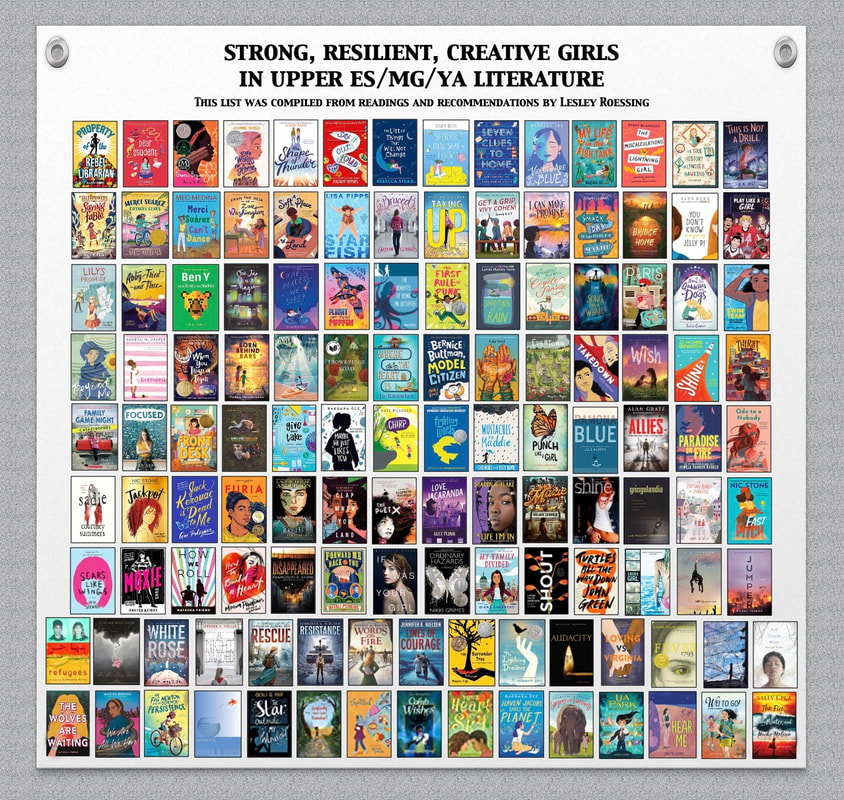
Property of the Rebel Librarian; Dear Student; Genesis Begins Again; Other Words for Home; The Shape of Thunder; Say It Out Loud; The List of Things that Will Not Change; When You Know What I Know; Seven Clues to Home; Violets Are Blue; My Life in the Fish Tank; The Miscalculations of Lightning Girl; The True History of Lyndie B. Hawkins; This Is Not a Drill; Saving Fable; Merci Suarez Changes Gears (and sequels); From the Desk of Zoe Washington; A Soft Place to Land; Starfish; Braced; Taking Up Space; Get A Grip, Vivy Cohen; I Can Make This Promise; Smack Dab in the Middle of Maybe; The Bridge Home; You Don’t Know Everything, Jilly P!; Play Like a Girl; Lily’s Promise; Abby Tried and True, Ben Y and the Ghost in the Machine; One Jar of Magic; The Places We Sleep; Flight of the Puffin; The Benefits of Being an Octopus, The First Rule of Punk; Shouting at the Rain; The Remarkable Journey of Coyote Sunrise; The Song of the Whale; The Paris Project; A Home for Goddesses and Dogs; Swim Team; Beyond Me; Blended; When You Trap a Tiger; Born Behind Bars; A Way Between Worlds; Trowbridge Road; Where the Heart Is; Bernice Buttman, Model Citizen; Amal Unbound; Eventown; Takedown; Wish; Shine!; Thirst; Family Game Night; Focused; Front Desk; Gem & Dixie; Give and Take; Maybe He Just Likes You; Chirp; Fighting Words; Mustaches for Maddie; Punch Like a Girl; Ramona Blue; Allies; Paradise on Fire; Ode to a Nobody; Sadie; Jackpot; Jack Kerouac Is Dead to Me; Furia; Wonder Woman—Tempest Tossed; Clap When You Land; The Poet X; Love, Jacaranda; The Life I’m In; Mazie; Shine, Coconut Moon; Gringolandia; The Orphan Band of Springdale; Fast Pitch; Scars Like Wings; Moxie; How We Roll; How to Build a Heart; Disappeared; Forward Me Back to You; If I Was Your Girl; Ordinary Hazards; My Family Divided; Shout; Turtles All the Way Down; Shark Girl; Exit, Pursued by a Bear; Jumper; Refugees; The Last Cherry Blossom; White Rose; A Night Divided; Rescue; Resistance; Words on Fire; Lines of Courage; The Surrender Tree; The Lightning Dreamer; Audacity; Loving vs Virginia; Fever 1793; An Uninterrupted View of the Sky; Full Cicada Moon; The Wolves Are Waiting; We Are All We Have; Sir Fig Newton and the Science of Persistence; Out of My Mind; The Star Outside my Window; Anybody Here Seen Frenchie?; Unsettled; Comb of Wishes; Your Heart-My Sky; Haven Jacobs Saves the Planet; Singing with Elephants; Lia Parks and the Missing Jewel; Hear Me; Wei to Go!; The Fire, The Water, and Maudie McGinn
These novels/memoirs that I have read, recommended, and reviewed feature strong, resilient, creative girls and young women (ages 10-20) and demonstrate that girls can be strong in diverse way.
For reviews of many of these novels/memoirs plus others on this topic, see my four YA Wednesday guest-blogs:
For reviews of many of these novels/memoirs plus others on this topic, see my four YA Wednesday guest-blogs:
- The New Nancy Drew: Strong Girls in MG/YA Literature
- 50 More Strong Girls in MG/YA Literature, Part A
- 50 More Strong Girls in MG/YA Literature, Part B
- Even More Strong Girls in MG/YA Literature
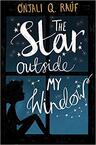
THE STAR OUTSIDE MY WINDOW by Onjali Q. Rauf
The Star Outside My Window is about a child with a plan.
When 10-year-old Aniyah’s mother disappeared in a sudden explosion, Aniyah was sure that her mum had become a star. Aniyah, her younger brother Noah, and Mum had been playing Hide and Seek with their father and staying in a hotel-that-wasn’t-really-a-hotel; the night that their mother disappeared, two policemen and a woman in a black suit took Aniyah and Noah to Waverly Village to live with Mrs. Iwuchukwu, a loving foster mother to Travis and Ben and the adopted Sophie.
But when they see on television that astronomers have sighted a phenomenon, “a real live burning star moving from one end of our solar system to the other…unlike anything else we’ve seen” (29-30), Aniyah, an amateur star hunter, is convinced the star is Mum’s heart. There is a contest to name the star, and Aniyah is determined to get to the Royal Observatory in London in time to make sure the star is not given the wrong name.
Ben and Travis help her come up with a plan, involving a 72.6 mile bike ride at night in their Halloween costumes, “Because we’re foster kids, and foster kids stick together no matter what. That’s the law.” (102) Despite having to leave their stolen bikes, a woman calling the police, carrying Noah, sneaking onto a bus, a possibly-broken ankle, and a lot of walking/hopping, the four bedraggled, and tired children, still in Halloween costumes, make it to the Kronos Annual Gala Dinner Observatory where Aniyah is determined to complete her mission. “I had to try to make them understand. Mum’s star needed me to.” (253) Led to The Great Equatorial Telescope, 1893, Aniyah uses her star hunting skills to show the adults the location of “the star that has transcended the laws of physics” (242) with her home-drawn map that she made “from my window.” (261)
This is an adventure story about domestic abuse, parental love, friendships, foster children and parents, and a bully—and lots of map skills and astronomy. The author includes references for domestic abuse survivors.
The Star Outside My Window is about a child with a plan.
When 10-year-old Aniyah’s mother disappeared in a sudden explosion, Aniyah was sure that her mum had become a star. Aniyah, her younger brother Noah, and Mum had been playing Hide and Seek with their father and staying in a hotel-that-wasn’t-really-a-hotel; the night that their mother disappeared, two policemen and a woman in a black suit took Aniyah and Noah to Waverly Village to live with Mrs. Iwuchukwu, a loving foster mother to Travis and Ben and the adopted Sophie.
But when they see on television that astronomers have sighted a phenomenon, “a real live burning star moving from one end of our solar system to the other…unlike anything else we’ve seen” (29-30), Aniyah, an amateur star hunter, is convinced the star is Mum’s heart. There is a contest to name the star, and Aniyah is determined to get to the Royal Observatory in London in time to make sure the star is not given the wrong name.
Ben and Travis help her come up with a plan, involving a 72.6 mile bike ride at night in their Halloween costumes, “Because we’re foster kids, and foster kids stick together no matter what. That’s the law.” (102) Despite having to leave their stolen bikes, a woman calling the police, carrying Noah, sneaking onto a bus, a possibly-broken ankle, and a lot of walking/hopping, the four bedraggled, and tired children, still in Halloween costumes, make it to the Kronos Annual Gala Dinner Observatory where Aniyah is determined to complete her mission. “I had to try to make them understand. Mum’s star needed me to.” (253) Led to The Great Equatorial Telescope, 1893, Aniyah uses her star hunting skills to show the adults the location of “the star that has transcended the laws of physics” (242) with her home-drawn map that she made “from my window.” (261)
This is an adventure story about domestic abuse, parental love, friendships, foster children and parents, and a bully—and lots of map skills and astronomy. The author includes references for domestic abuse survivors.
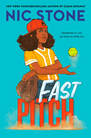
FAST PITCH by Nic Stone
Twelve-year-old Shanice Lockwood is captain of a softball team, the Firebirds, the only all-Black softball team in the Dixie Youth Softball Association. She comes from a long line of batball players—her father, her grandfather PopPop, her great-grandfather. Her one goal is for her team to win the state championship.
But her goal shifts when she meets her Great-Great Uncle Jack, her Great-Grampy JonJon’s brother.
Shanice’s father had to quit baseball when he blew out his knee, his father had to stop playing to support his family, but why did JonJon quit when he was successfully playing for the Negro American League and was one of the first Black players recruited to the MLB? When Shanice is taken to Peachtree Hills Place to meet her sometimes-senile uncle, he tells her that JonJon “didn’t do what they said he did…He was framed.” (46) “My brother ain’t no thief. He didn’t do it…But I know who did.” (47)
And Shanice is off on a quest to research the incident that caused her great grandfather to leave baseball and to see if she, with Jack’s information and JonJon’s leather journal, can clear his name while still trying to lead her softball team to victory.
Fast Pitch is a fun new novel by Nic Stone, full of batball, adventure, a little mystery, peer and family relationships, Negro League history, prejudice, and maybe a first crush.
Twelve-year-old Shanice Lockwood is captain of a softball team, the Firebirds, the only all-Black softball team in the Dixie Youth Softball Association. She comes from a long line of batball players—her father, her grandfather PopPop, her great-grandfather. Her one goal is for her team to win the state championship.
But her goal shifts when she meets her Great-Great Uncle Jack, her Great-Grampy JonJon’s brother.
Shanice’s father had to quit baseball when he blew out his knee, his father had to stop playing to support his family, but why did JonJon quit when he was successfully playing for the Negro American League and was one of the first Black players recruited to the MLB? When Shanice is taken to Peachtree Hills Place to meet her sometimes-senile uncle, he tells her that JonJon “didn’t do what they said he did…He was framed.” (46) “My brother ain’t no thief. He didn’t do it…But I know who did.” (47)
And Shanice is off on a quest to research the incident that caused her great grandfather to leave baseball and to see if she, with Jack’s information and JonJon’s leather journal, can clear his name while still trying to lead her softball team to victory.
Fast Pitch is a fun new novel by Nic Stone, full of batball, adventure, a little mystery, peer and family relationships, Negro League history, prejudice, and maybe a first crush.
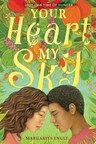
YOUR HEART, MY SKY by Margarita Engle
I began learning about the history of Cuba through Cuban-American poet Margarita Engle’s memoir, Enchanted Sky. I continued my study, learning more Cuban history through Engle's stories of Tula, Rosa, Daniel, a Holocaust refugees in Cuba, and the story of Fefa, based on Engle’s grandmother. But there is still more history to learn. Your Heart, My Sky introduced me to a different, more contemporary era, “el period especial en tiempos de paz.” The government’s name for the 1990s is “the special period in times of peace,” but in reality is a period of extreme hunger resulting from the loss of Soviet aid, the US trade embargo, and the government prohibition of the growing, buying, and selling of agricultural products. Even though the 1991 Pan Am Games are being held in Havana, where visitors and athletes are sure to find food, the people in the towns face starvation, their food rations reduced even more.
No witnesses.
We are like an outer isle
Off the shore of another island.
Forgotten. (3)
My parents quietly call it tourist apartheid.
Everything for outsiders.
Nothing for islanders.” (Liana, 6)
Readers are introduced to the disastrous effects of these policies on the citizens through the three narrators: Liana, Amado, and the Singing Dog who serves as a matchmaker between, and a guard of, the two adolescents.
Liana and Amado are both rebels in their own ways: Liana skips la escuela al campo “a summer of forced so-called-volunteer farm labor,” possibly giving up college or a government-assigned tolerable job, spending her days looking for food. Amado has made a pact with his brother who is in jail for speaking against the government. He is worried that he won’t be able to keep his promise to avoid the mandatory military service—“men have to serve in the reserves until they’re fifty”—and promote peace, possibly joining his brother in prison.
Maybe I should let myself be trained to kill,
become a soldier, gun-wielding, violent,
a dangerous stranger, no longer
me.” (Amado, 24)
In beautiful lyrical verse, lines that caused me to re-read and savor, Liana and Amado meet and fall in love,
The pulse in my mind wanders away
From hunger, toward something I can barely name.
A spark
of wishlight
on the dark horizon’s
oceanic warmth. (Liana, 35)
Liana meets Amado’s grandparents who are growing vegetables and fruits in hidden gardens, and she is given seeds to start her own gardens. She dreams of starting a kitchen restaurant.
Everything has changed inside our minds
So that we are intensely aware of our ability
To seize control of hunger,
Transforming food
Into freedom. (110)
Amado and Liana help fleeing refugees, even though
Leaving the island is forbidden by law
And it is equally illegal
To know that someone is planning to flee. (95)
When Amado receives a note from his brother releasing him from their pact, he secretly plans their rafting escape. But the indecision brought about by the precariousness of the trip cause them to reconsider.
All we have in our shared hearts
is one imaginary raft--
How shall we use it?
Climb aboard or set it loose,
Let that alternate future
drift away? (Liana and Amado, 197)
A beautiful story of a terrible time in Cuban history and two resilient families connected by love (and a singing dog).
I began learning about the history of Cuba through Cuban-American poet Margarita Engle’s memoir, Enchanted Sky. I continued my study, learning more Cuban history through Engle's stories of Tula, Rosa, Daniel, a Holocaust refugees in Cuba, and the story of Fefa, based on Engle’s grandmother. But there is still more history to learn. Your Heart, My Sky introduced me to a different, more contemporary era, “el period especial en tiempos de paz.” The government’s name for the 1990s is “the special period in times of peace,” but in reality is a period of extreme hunger resulting from the loss of Soviet aid, the US trade embargo, and the government prohibition of the growing, buying, and selling of agricultural products. Even though the 1991 Pan Am Games are being held in Havana, where visitors and athletes are sure to find food, the people in the towns face starvation, their food rations reduced even more.
No witnesses.
We are like an outer isle
Off the shore of another island.
Forgotten. (3)
My parents quietly call it tourist apartheid.
Everything for outsiders.
Nothing for islanders.” (Liana, 6)
Readers are introduced to the disastrous effects of these policies on the citizens through the three narrators: Liana, Amado, and the Singing Dog who serves as a matchmaker between, and a guard of, the two adolescents.
Liana and Amado are both rebels in their own ways: Liana skips la escuela al campo “a summer of forced so-called-volunteer farm labor,” possibly giving up college or a government-assigned tolerable job, spending her days looking for food. Amado has made a pact with his brother who is in jail for speaking against the government. He is worried that he won’t be able to keep his promise to avoid the mandatory military service—“men have to serve in the reserves until they’re fifty”—and promote peace, possibly joining his brother in prison.
Maybe I should let myself be trained to kill,
become a soldier, gun-wielding, violent,
a dangerous stranger, no longer
me.” (Amado, 24)
In beautiful lyrical verse, lines that caused me to re-read and savor, Liana and Amado meet and fall in love,
The pulse in my mind wanders away
From hunger, toward something I can barely name.
A spark
of wishlight
on the dark horizon’s
oceanic warmth. (Liana, 35)
Liana meets Amado’s grandparents who are growing vegetables and fruits in hidden gardens, and she is given seeds to start her own gardens. She dreams of starting a kitchen restaurant.
Everything has changed inside our minds
So that we are intensely aware of our ability
To seize control of hunger,
Transforming food
Into freedom. (110)
Amado and Liana help fleeing refugees, even though
Leaving the island is forbidden by law
And it is equally illegal
To know that someone is planning to flee. (95)
When Amado receives a note from his brother releasing him from their pact, he secretly plans their rafting escape. But the indecision brought about by the precariousness of the trip cause them to reconsider.
All we have in our shared hearts
is one imaginary raft--
How shall we use it?
Climb aboard or set it loose,
Let that alternate future
drift away? (Liana and Amado, 197)
A beautiful story of a terrible time in Cuban history and two resilient families connected by love (and a singing dog).
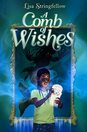
A COMB OF WISHES by Lisa Stringfellow
“She pulled out the delicate orange sea glass necklace. A mermaid’s tear. Not of sadness, but of joy.” (243)
Folktales, folkcrafts, Caribbean culture and lore—and a fascinating, fantastical story, an interesting array of characters, and exquisite writing which grabbed hold of me and didn’t let go until I finished reading.
Kela is grieving the accidental death of her mother. She also is experiencing intense guilt; the last thing she said to her mother, a professor busy with her study of the island’s folklore, was, “I hate you.” “Three months had gone but still Kela resisted her mother’s death. For a while, Pop seemed to be in the same fog that engulfed her. He stopped going to work, letting George run their business on his own, and hardly left his bedroom.” (71)
When Kela finds a hidden box containing a comb belonging to a mermaid, she doesn’t have to think twice about her one wish, even though “Magic always has a cost and it can be dear. The stronger the magic you invoke, the deeper the consequence.… The consequence of magic is in proportion to its strength.” (83)
This is not your Disney or even Hans Christian Anderson Little Mermaid but the real deal of Caribbean folklore. A trade is struck—the comb for a wish. However, the comb is part of the island’s cultural heritage and, as such, could be claimed by the government and Kela’s father, who is unaware of the treasure, placed in serious trouble. In even worse luck, the comb breaks and then is stolen, and Kela is worried that she has lost her bargaining power—after her wish has been granted. “[Kela] wondered if there was some truth in the old tales. An icy fear crept over her. Who or what might come for her?” (43)
Luckily, Kela has a true friend in Lissy and Lissy’s grandmother, an island storyteller, and, eventually, Ophida herself.
Alternating between Ophida’s and Kela’s stories—past and present—readers can sense the power of story. Part suspense, part fantasy, part mystery, part betrayal, and part love; revenge and salvation, “This is a story”; however, “The story is put on you,” the reader, to interpret.
I would suggest pairing A Comb of Wishes with Salman’s Rushdie’s memorable Haroun and the Sea of Stories, another fantasy about the importance of “stories that aren’t even true.”
“She pulled out the delicate orange sea glass necklace. A mermaid’s tear. Not of sadness, but of joy.” (243)
Folktales, folkcrafts, Caribbean culture and lore—and a fascinating, fantastical story, an interesting array of characters, and exquisite writing which grabbed hold of me and didn’t let go until I finished reading.
Kela is grieving the accidental death of her mother. She also is experiencing intense guilt; the last thing she said to her mother, a professor busy with her study of the island’s folklore, was, “I hate you.” “Three months had gone but still Kela resisted her mother’s death. For a while, Pop seemed to be in the same fog that engulfed her. He stopped going to work, letting George run their business on his own, and hardly left his bedroom.” (71)
When Kela finds a hidden box containing a comb belonging to a mermaid, she doesn’t have to think twice about her one wish, even though “Magic always has a cost and it can be dear. The stronger the magic you invoke, the deeper the consequence.… The consequence of magic is in proportion to its strength.” (83)
This is not your Disney or even Hans Christian Anderson Little Mermaid but the real deal of Caribbean folklore. A trade is struck—the comb for a wish. However, the comb is part of the island’s cultural heritage and, as such, could be claimed by the government and Kela’s father, who is unaware of the treasure, placed in serious trouble. In even worse luck, the comb breaks and then is stolen, and Kela is worried that she has lost her bargaining power—after her wish has been granted. “[Kela] wondered if there was some truth in the old tales. An icy fear crept over her. Who or what might come for her?” (43)
Luckily, Kela has a true friend in Lissy and Lissy’s grandmother, an island storyteller, and, eventually, Ophida herself.
Alternating between Ophida’s and Kela’s stories—past and present—readers can sense the power of story. Part suspense, part fantasy, part mystery, part betrayal, and part love; revenge and salvation, “This is a story”; however, “The story is put on you,” the reader, to interpret.
I would suggest pairing A Comb of Wishes with Salman’s Rushdie’s memorable Haroun and the Sea of Stories, another fantasy about the importance of “stories that aren’t even true.”
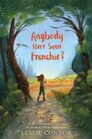
ANYBODY HERE SEEN FRENCHIE? by Leslie Connor
“You’re having a new kind of year.” Mr. Menkis says it for me. ”Treat yourself sweetly, Aurora. Change happens. It’s the world’s number one constant.” (66)
Sixth-grader Aurora Petrequin has known Frenchie Livernois since the beginning of third grade when he and his mother rented their next-door house. The best friends are inseparable and opposite. Frenchie has autism and doesn’t speak—at all; Aurora is loud and talks impulsively—all the time. Together they explore nature—Frenchie obsessed with birds, Auruora with rocks, especially finding a tourmaline, a mineral produced in areas of her native Maine.
Aurora has no trouble understanding Frenchie and interpreting his body language, and one goal she has is to help others see him. When Sheree of Troviosity gifts Frenchie with an expensive Audubon print of a nuthatch for his bird print collection, Aurora says, “Thanks for seeing him.” (99)
But then sixth grade arrives, and for the first time Frenchie is in a different class and has a new aide, Mr. Menkis. Aurora panics, “Mom! Pop! Gracia! There’s a mess-up of all mess-ups here! Frenchie and I got put in different classes.” (3) And another change is that two new students move to her school and class and, for the first time, besides Frenchie, Aurora has friends.
When Frenchie disappears one day, Aurora panics and feels guilty for not walking him to his room that morning. While they search for Frenchie, Aurora examines everything she knows about him. As she tells Joanie and Leena, “Frenchie doesn’t get lost.… He gets me unlost. Like a human compass.” (86)
But one day turns into two. “I’m thinking about Frenchie. Best Days. Like, when Cedar came home. And family dinners and pancake Sundays. Bird hounding and rock hounding, and me cheering Frenchie on the day he learned to float. Him going along with me, the times we trailed the piebald deer. And him knowing the way home. Having a true friend—the thing I am aching for this morning. (265)
And this is truly a story about friendship. It is not about neurodiversity; it is not about nature (although nature is a catalyst and a bond between Frenchie and Aurora and between many of the townspeople), it is first and foremost about the power and symbiotic relationship of friendship like no novel I have every read.
As the town gathers and comes together to look for Frenchie, adding more and more people to the search, people who remember meeting Frenchie with Aurora, people begin to see Frenchie, “[Aurora’s] bird-loving, no-talk, very best friend.” (321)
A story told in multiple viewpoints for all upper elementary and middle school readers offering adventure, mystery, nature, characters of all ages from baby Cedar to adults who sometimes surprise us, and heart.
“You’re having a new kind of year.” Mr. Menkis says it for me. ”Treat yourself sweetly, Aurora. Change happens. It’s the world’s number one constant.” (66)
Sixth-grader Aurora Petrequin has known Frenchie Livernois since the beginning of third grade when he and his mother rented their next-door house. The best friends are inseparable and opposite. Frenchie has autism and doesn’t speak—at all; Aurora is loud and talks impulsively—all the time. Together they explore nature—Frenchie obsessed with birds, Auruora with rocks, especially finding a tourmaline, a mineral produced in areas of her native Maine.
Aurora has no trouble understanding Frenchie and interpreting his body language, and one goal she has is to help others see him. When Sheree of Troviosity gifts Frenchie with an expensive Audubon print of a nuthatch for his bird print collection, Aurora says, “Thanks for seeing him.” (99)
But then sixth grade arrives, and for the first time Frenchie is in a different class and has a new aide, Mr. Menkis. Aurora panics, “Mom! Pop! Gracia! There’s a mess-up of all mess-ups here! Frenchie and I got put in different classes.” (3) And another change is that two new students move to her school and class and, for the first time, besides Frenchie, Aurora has friends.
When Frenchie disappears one day, Aurora panics and feels guilty for not walking him to his room that morning. While they search for Frenchie, Aurora examines everything she knows about him. As she tells Joanie and Leena, “Frenchie doesn’t get lost.… He gets me unlost. Like a human compass.” (86)
But one day turns into two. “I’m thinking about Frenchie. Best Days. Like, when Cedar came home. And family dinners and pancake Sundays. Bird hounding and rock hounding, and me cheering Frenchie on the day he learned to float. Him going along with me, the times we trailed the piebald deer. And him knowing the way home. Having a true friend—the thing I am aching for this morning. (265)
And this is truly a story about friendship. It is not about neurodiversity; it is not about nature (although nature is a catalyst and a bond between Frenchie and Aurora and between many of the townspeople), it is first and foremost about the power and symbiotic relationship of friendship like no novel I have every read.
As the town gathers and comes together to look for Frenchie, adding more and more people to the search, people who remember meeting Frenchie with Aurora, people begin to see Frenchie, “[Aurora’s] bird-loving, no-talk, very best friend.” (321)
A story told in multiple viewpoints for all upper elementary and middle school readers offering adventure, mystery, nature, characters of all ages from baby Cedar to adults who sometimes surprise us, and heart.
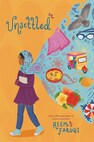
UNSETTLED by Reem Faruqi
In my last school,
I always knew
where to sit
and with who.
In my last school,
my name was known.
In my last school,
my voice was loud.
In this school,
I am mute.
In this school,
I am invisible. (91-92)
Nurah, her older brother Owais and their parents move from Karachi, Pakistan, to Peachtree, Georgia, for better schools and job security, leaving behind her three grandparents and her best friend Asna. The transition is not easy. In America they live in a hotel; Nurah’s mother seems to be fading, and her brother begins rebelling. When Nurah and Owais find a swimming pool at the Rec Center, they regain a bit of home. But Owais is an expert swimmer, appearing to fit in more effortlessly.
It is important to note
that my skin is
dark
like the heel of oatmeal bread
while Owais’s skin is
light
like the center of oatmeal bread.
We do not look alike
are not recognized
as brother and sister. (225)
The water is Nurah’s only friend, until
“Do you want to eat lunch with me?”
8 words that change my life. (110)
Nurah’s new friend Stahr also wears long sleeves, but not from Muslim modesty, and her secret bring the two girls and their mothers together.
And one day when Stahr is not at school at lunchtime, and Naurah is being bullied,
“I’m Destiny.
You can eat with us…” (216)
And then Owais is beat up by two of the boys on the swim team, jealous of his success, and Nurah feels guilty for not warning him to not go into the locker room. After his hospitalization, he gives up swimming.
he is
always in his room
lately,
because he is safer
on land
than in water (265)
And Nurah discovers another type of bullying when the boy she likes and his friends make fun of her visiting grandmother whose “mind becomes so tangled.”
I remember when my tongue
Betrayed me.
I remember
I need to
say something.
I go back in
to their laughter.
I find my voice
and
spit it out
“It’s not funny.”
The store gets
Very Quiet
and I feel
light again.
I grab Dadi’s ice cream.
I remember what hope
tastes like… (273)
When Nurah decides to begin wearing her hijab,
In the beginning
the looks of others spear me
but the more I wear it
the easier it becomes.
the more I wear it
the looks seem to
soften. (284)
Finally, at the masjid with Owais and his new friend Junaid
Today I wear my hijab
,
Tightly wrapped,
shimmery light blue,…
today when I look
in the mirror,
I think--
“Not bad.”
I feel prettier than I have
In a long time
And exactly where
I’m supposed to
be. (305)
A story of transition, new beginnings, the importance of friendship, and finding one’s voice and our “something unexpected,” Reem Faruqi’s verse novel is based on her childhood experiences as an immigrant living in Georgia.
In my last school,
I always knew
where to sit
and with who.
In my last school,
my name was known.
In my last school,
my voice was loud.
In this school,
I am mute.
In this school,
I am invisible. (91-92)
Nurah, her older brother Owais and their parents move from Karachi, Pakistan, to Peachtree, Georgia, for better schools and job security, leaving behind her three grandparents and her best friend Asna. The transition is not easy. In America they live in a hotel; Nurah’s mother seems to be fading, and her brother begins rebelling. When Nurah and Owais find a swimming pool at the Rec Center, they regain a bit of home. But Owais is an expert swimmer, appearing to fit in more effortlessly.
It is important to note
that my skin is
dark
like the heel of oatmeal bread
while Owais’s skin is
light
like the center of oatmeal bread.
We do not look alike
are not recognized
as brother and sister. (225)
The water is Nurah’s only friend, until
“Do you want to eat lunch with me?”
8 words that change my life. (110)
Nurah’s new friend Stahr also wears long sleeves, but not from Muslim modesty, and her secret bring the two girls and their mothers together.
And one day when Stahr is not at school at lunchtime, and Naurah is being bullied,
“I’m Destiny.
You can eat with us…” (216)
And then Owais is beat up by two of the boys on the swim team, jealous of his success, and Nurah feels guilty for not warning him to not go into the locker room. After his hospitalization, he gives up swimming.
he is
always in his room
lately,
because he is safer
on land
than in water (265)
And Nurah discovers another type of bullying when the boy she likes and his friends make fun of her visiting grandmother whose “mind becomes so tangled.”
I remember when my tongue
Betrayed me.
I remember
I need to
say something.
I go back in
to their laughter.
I find my voice
and
spit it out
“It’s not funny.”
The store gets
Very Quiet
and I feel
light again.
I grab Dadi’s ice cream.
I remember what hope
tastes like… (273)
When Nurah decides to begin wearing her hijab,
In the beginning
the looks of others spear me
but the more I wear it
the easier it becomes.
the more I wear it
the looks seem to
soften. (284)
Finally, at the masjid with Owais and his new friend Junaid
Today I wear my hijab
,
Tightly wrapped,
shimmery light blue,…
today when I look
in the mirror,
I think--
“Not bad.”
I feel prettier than I have
In a long time
And exactly where
I’m supposed to
be. (305)
A story of transition, new beginnings, the importance of friendship, and finding one’s voice and our “something unexpected,” Reem Faruqi’s verse novel is based on her childhood experiences as an immigrant living in Georgia.
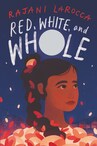
RED, WHITE AND WHOLE by Rajani LaRocca
I listen to my mother.
Always.
But I am an American,
I was born here,
it’s the only home I know.
So I’m caught between the life I want to lead
And the one she thinks I should. (4)
----
Thirteen-year-old Reha was born in America. Her parents married in India and moved to America for a better life, and Amma is very traditional and has strict expectations for their only child. Reha is sent to a private school where…
At school I swim in a river of white skin
And blond hair and brown hair
And blue eyes and green eyes and hazel,
School subjects and giggles about boys,
Salad and sandwiches. (1)
When you are different
You constantly compare…
My mother-made clothes are funny
My jeans are not the fashionable kind.
They notice that my hair is black and thick
My eyes are darkest brown
And my skin is different from everyone else’s. (33)
But also
… on weekends,
I float in a sea of brown skin and black hair and dark eyes,
MTV music videos and giggles about boys,
Samosa and sabjis. (1)
Reha lives in two worlds. She has two best friends, Sunita (“Sunny”) whom she has known since age two but whose Indian family is more modern than hers and Rachel, a Jewish girl who is as serious about her studies as Reha. And she visits her relatives in India in the summer. But she does hope to fit in better in school and be permitted to go to the school dance and even dance with her new friend Pete.
Unfortunately, after the dance Amma becomes very ill with leukemia. Since Amma works in a laboratory, Reha, who faints at the sight of blood, knows all about its components:
[Amma] counts the red cells,
that carry oxygen,
the platelets.
that stop bleeding,
and the white cells,
the warriors protecting us from invaders.
At least
If they’re doing what they’re supposed to do.
Cells and plasma together are called whole blood,
which is what flows inside us. (27)
Unfortunately Amma’s blood is not doing what it is supposed to, and neither her older sister, who is pregnant, nor Reha are viable bone marrow donors. She does discover that her school friends do care about her.
…all the other girls,
the ones who seemed too caught up with their clothes and hair and nails
reach out to squeeze my arm
pull me into hugs
murmur words of encouragement.
And it turns out I have yet another family,
one I never thought to call my own. (111)
Reha hopes that if she is the best and most virtuous she can be, Amma will heal. But, sadly, that is not to be.
I have two lives.
The one Before
and the one After. (193)
Reha now has her father, Sunny, Rachel, Pete, her Indian community, and her school community and her aunt and uncle and baby Chandra in India. And unexpectedly a letter arrives from her mother, written before her death.
She believed I didn’t need to be split in two,
that I could be whole.
and now I start to believe it, too. (206)
I have one life,
where I try to merge all the places I’m from,
India and America,
mother and father,
past, present,
and future. (209)
With characters who became so real, I cried with them like a member of the family, this is a story of being a part of two worlds—as are many of our readers—and feeling that you are different—as do most of our adolescent readers at one time or another.
I listen to my mother.
Always.
But I am an American,
I was born here,
it’s the only home I know.
So I’m caught between the life I want to lead
And the one she thinks I should. (4)
----
Thirteen-year-old Reha was born in America. Her parents married in India and moved to America for a better life, and Amma is very traditional and has strict expectations for their only child. Reha is sent to a private school where…
At school I swim in a river of white skin
And blond hair and brown hair
And blue eyes and green eyes and hazel,
School subjects and giggles about boys,
Salad and sandwiches. (1)
When you are different
You constantly compare…
My mother-made clothes are funny
My jeans are not the fashionable kind.
They notice that my hair is black and thick
My eyes are darkest brown
And my skin is different from everyone else’s. (33)
But also
… on weekends,
I float in a sea of brown skin and black hair and dark eyes,
MTV music videos and giggles about boys,
Samosa and sabjis. (1)
Reha lives in two worlds. She has two best friends, Sunita (“Sunny”) whom she has known since age two but whose Indian family is more modern than hers and Rachel, a Jewish girl who is as serious about her studies as Reha. And she visits her relatives in India in the summer. But she does hope to fit in better in school and be permitted to go to the school dance and even dance with her new friend Pete.
Unfortunately, after the dance Amma becomes very ill with leukemia. Since Amma works in a laboratory, Reha, who faints at the sight of blood, knows all about its components:
[Amma] counts the red cells,
that carry oxygen,
the platelets.
that stop bleeding,
and the white cells,
the warriors protecting us from invaders.
At least
If they’re doing what they’re supposed to do.
Cells and plasma together are called whole blood,
which is what flows inside us. (27)
Unfortunately Amma’s blood is not doing what it is supposed to, and neither her older sister, who is pregnant, nor Reha are viable bone marrow donors. She does discover that her school friends do care about her.
…all the other girls,
the ones who seemed too caught up with their clothes and hair and nails
reach out to squeeze my arm
pull me into hugs
murmur words of encouragement.
And it turns out I have yet another family,
one I never thought to call my own. (111)
Reha hopes that if she is the best and most virtuous she can be, Amma will heal. But, sadly, that is not to be.
I have two lives.
The one Before
and the one After. (193)
Reha now has her father, Sunny, Rachel, Pete, her Indian community, and her school community and her aunt and uncle and baby Chandra in India. And unexpectedly a letter arrives from her mother, written before her death.
She believed I didn’t need to be split in two,
that I could be whole.
and now I start to believe it, too. (206)
I have one life,
where I try to merge all the places I’m from,
India and America,
mother and father,
past, present,
and future. (209)
With characters who became so real, I cried with them like a member of the family, this is a story of being a part of two worlds—as are many of our readers—and feeling that you are different—as do most of our adolescent readers at one time or another.
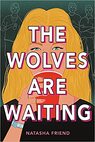
THE WOLVES ARE WAITING by Natasha Friend
Nora Melchionda was a typical high school girl. She played a sport, earned good grades, wore fashionable clothes, and had a group of friends, an older brother and a younger sister. Her father was Athletic Director of Faber, the local college, and her hero.
Then one night Nora attends the college frat fair, a fundraiser for the fraternities. And she wakes up on the golf course, surrounded by her former best friend and Adam Xu, a boy from school. The last thing she remembers is someone handing her a root beer. Adam explains how he was practicing his baseball hitting, found her, and chased off the three boys who, most likely, had roofied her and were planning to rape her, and called Cam.
“They took off her clothes, and they wrote on her body, and they hung her underwear on a stick like some kind of trophy.” (139)
Nora wants to forget what happened. “It didn’t happen to you. It happened to me. And if I say it’s over, it’s over.” (50), but Adam and Cam are determined to investigate and find out who the boys were and what exactly happened, especially when they begin hearing of other stories by young women of the college and the town. “Help me find out who they are,” [Cam] said. “Please. Before they do it to someone else.” (110)
Through technology and good legwork, they trace the young men to Alpha Phi Beta, the Faber fraternity for athletes, Nora’s father’s fraternity, and discover that what happened to Nora was part of a pledge game.
The story is told in alternating chapters narrated from the perspective of Nora, Cam, Adam Xu, and Asher, Nora’s older brother, a well-meaning high school senior who learns a lesson himself. “You tried to tell me. ‘When you wear things that are too short’—she shook her finger and made her voice deep—‘guys think it’s an invitation.’” He shook his head. ‘I said some guys. I didn’t mean—.’”(139)
With her new supporters and her mother and younger sister, Nora decides she has the strength to make a difference and end this sexual harassment and abuse.
An important, even vital, well-told story for adolescent girls—and especially—boys, Natasha Friend’s newest novel joins a too-small group of other novels about this crucial topic. Assaults among people under the age of 18 are common: 18% of girls and 3% of boys say that by age 17 they have been victims of a sexual assault or abuse at the hands of another adolescent (theconversation.com). Females ages 16-19 are 4 times more likely than the general population to be victims of rape, attempted rape, or sexual assault. Among undergraduate students, 26.4% of females and 6.8% of males experience rape or sexual assault through physical force, violence, or incapacitation. These statistics are incomplete as only 20% of female student victims, age 18-24, report to law enforcement. (RAINN.org).
Nora Melchionda was a typical high school girl. She played a sport, earned good grades, wore fashionable clothes, and had a group of friends, an older brother and a younger sister. Her father was Athletic Director of Faber, the local college, and her hero.
Then one night Nora attends the college frat fair, a fundraiser for the fraternities. And she wakes up on the golf course, surrounded by her former best friend and Adam Xu, a boy from school. The last thing she remembers is someone handing her a root beer. Adam explains how he was practicing his baseball hitting, found her, and chased off the three boys who, most likely, had roofied her and were planning to rape her, and called Cam.
“They took off her clothes, and they wrote on her body, and they hung her underwear on a stick like some kind of trophy.” (139)
Nora wants to forget what happened. “It didn’t happen to you. It happened to me. And if I say it’s over, it’s over.” (50), but Adam and Cam are determined to investigate and find out who the boys were and what exactly happened, especially when they begin hearing of other stories by young women of the college and the town. “Help me find out who they are,” [Cam] said. “Please. Before they do it to someone else.” (110)
Through technology and good legwork, they trace the young men to Alpha Phi Beta, the Faber fraternity for athletes, Nora’s father’s fraternity, and discover that what happened to Nora was part of a pledge game.
The story is told in alternating chapters narrated from the perspective of Nora, Cam, Adam Xu, and Asher, Nora’s older brother, a well-meaning high school senior who learns a lesson himself. “You tried to tell me. ‘When you wear things that are too short’—she shook her finger and made her voice deep—‘guys think it’s an invitation.’” He shook his head. ‘I said some guys. I didn’t mean—.’”(139)
With her new supporters and her mother and younger sister, Nora decides she has the strength to make a difference and end this sexual harassment and abuse.
An important, even vital, well-told story for adolescent girls—and especially—boys, Natasha Friend’s newest novel joins a too-small group of other novels about this crucial topic. Assaults among people under the age of 18 are common: 18% of girls and 3% of boys say that by age 17 they have been victims of a sexual assault or abuse at the hands of another adolescent (theconversation.com). Females ages 16-19 are 4 times more likely than the general population to be victims of rape, attempted rape, or sexual assault. Among undergraduate students, 26.4% of females and 6.8% of males experience rape or sexual assault through physical force, violence, or incapacitation. These statistics are incomplete as only 20% of female student victims, age 18-24, report to law enforcement. (RAINN.org).
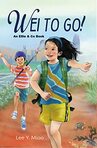
WEI TO GO! by Lee Y. Miao
“A runner, a home-run wannabe, and a lacrosse trainee get off a subway exit in Kowloon.” (227) No, this is not the opening line of a joke. It actually is the middle of an adventure starring Elizabeth Wei Pettit, Kipp Wei Pettit, and their mother.
When she finds out that the design firm her father founded is about to face a corporate takeover by the Black Turtle Group based in Hong Kong and her family would have to move away from her bestie, her new maybe-crush, and her softball team (before finally getting a wristband for her first homerun), Ellie decides to save Avabrand. She talks her mother into accepting a trip to Hong Kong won in a contest—and take her along. Unfortunately, her annoying younger sports-minded brother also has to go, but, on the positive side, he is a human GPS, and navigation is definitely not Ellie’s strong point. “One family and two kids with one middle name. Three months before seventh grade and I’m traveling across the Pacific to save my dad’s company. With my little brother—ugh!” (45)
After many cryptic, clues, dead ends, and sharp turns involving two brothers—Mr. Han (Ellie’s Chinese heritage teacher in the U.S.) and Gerard (BT’s CEO), and a lot of resilience, leading to a face-off and hopefully a win:
“I straighten myself up. I can go for it.
My family will not be kicked off our front porch.
I will stay in my school.
I will stay in my home.
Kipp will stay on his lacrosse team when he makes it.
Mom will stay with her job.
Dad will stay with his company.” (268)
There is another positive side to the trip. “When I found out the world is bigger than my family and me, I didn’t know I’d literally be running around in a new place far from home.” (271) Asian-American Ellie and the readers learn a lot about Hong Kong, Chinese culture, the business world, and the support of other people. “I had lots of help. [Mr. Han] nudged me at first. I had Kipp and Mom. I thought about things that Dad, my softball coach, my English teacher, and my bestie said to me. Even my next-door neighbor and her two little boys. They were all with me at different times.” (269)
“A runner, a home-run wannabe, and a lacrosse trainee get off a subway exit in Kowloon.” (227) No, this is not the opening line of a joke. It actually is the middle of an adventure starring Elizabeth Wei Pettit, Kipp Wei Pettit, and their mother.
When she finds out that the design firm her father founded is about to face a corporate takeover by the Black Turtle Group based in Hong Kong and her family would have to move away from her bestie, her new maybe-crush, and her softball team (before finally getting a wristband for her first homerun), Ellie decides to save Avabrand. She talks her mother into accepting a trip to Hong Kong won in a contest—and take her along. Unfortunately, her annoying younger sports-minded brother also has to go, but, on the positive side, he is a human GPS, and navigation is definitely not Ellie’s strong point. “One family and two kids with one middle name. Three months before seventh grade and I’m traveling across the Pacific to save my dad’s company. With my little brother—ugh!” (45)
After many cryptic, clues, dead ends, and sharp turns involving two brothers—Mr. Han (Ellie’s Chinese heritage teacher in the U.S.) and Gerard (BT’s CEO), and a lot of resilience, leading to a face-off and hopefully a win:
“I straighten myself up. I can go for it.
My family will not be kicked off our front porch.
I will stay in my school.
I will stay in my home.
Kipp will stay on his lacrosse team when he makes it.
Mom will stay with her job.
Dad will stay with his company.” (268)
There is another positive side to the trip. “When I found out the world is bigger than my family and me, I didn’t know I’d literally be running around in a new place far from home.” (271) Asian-American Ellie and the readers learn a lot about Hong Kong, Chinese culture, the business world, and the support of other people. “I had lots of help. [Mr. Han] nudged me at first. I had Kipp and Mom. I thought about things that Dad, my softball coach, my English teacher, and my bestie said to me. Even my next-door neighbor and her two little boys. They were all with me at different times.” (269)
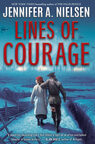
LINES OF COURAGE by Jennifer Nielsen
“There is a fire within each of us. If you fuel that fire with anger, it will burn all your happiness. But if you fuel it with courage, then the fire will give you strength to do difficult things.” (45-46)
Jennifer Nielsen has become my history teacher. I learned about the rise of the Berlin Wall from A Night Divided, about the Russian occupation of Lithuania (1795-1918) from Words on Fire, more about Nazi-occupied Poland from reading Resistance, and the French Resistance from Rescue, all featuring strong, resilient young women. In Nielsen’s novel, Lines of Courage, I learned more in the first chapter about WWI than from my high school history classes, seeing the events which precipitated the war from the up close perspective of a young adolescent.
“One of the most effective ways to learn about any historical event, and the nuances and effects of those events, is through a novel study—the power of story. Every historical event is distinct and affects people and places uniquely—and each is surrounded by misconceptions, misunderstandings, miscommunications, and differing and shifting perspectives. We may learn about history through textbooks and lectures, but we experience history through novels. And when we live it, we learn it; we do not merely learn about it. We discern the complex issues, and we feel empathy for all affected. We bear witness to the events we read and the plights of the people affected by those events.” (“Learning History through Story”). Nielsen's historical fiction novels are for both ELA and Social Studies/History classes.
In this novel readers experience the war from all perspectives, the Allies and the Central Powers, through the stories of five adolescents, boys strong girls and boys: Felix, a young Jew from Austria-Hungary; Kara from Britain whose burning ambition is to earn her Red Cross pin; Juliette from France whose father has been imprisoned; a too-young soldier, Dimitri from Russia; and Elsa from Germany who raises homing pigeons. From June 1914 to November 11, 1918, their stories span the timeline of war. And, as unlikely as it seems, their paths cross as the each find courage to be saved and to save.
“…that is life. Mademoiselle, something will always be in your way. So draw your line around it and keep going. You will find your family again, but it will come at the end of a long and crooked path.” (230)
“There is a fire within each of us. If you fuel that fire with anger, it will burn all your happiness. But if you fuel it with courage, then the fire will give you strength to do difficult things.” (45-46)
Jennifer Nielsen has become my history teacher. I learned about the rise of the Berlin Wall from A Night Divided, about the Russian occupation of Lithuania (1795-1918) from Words on Fire, more about Nazi-occupied Poland from reading Resistance, and the French Resistance from Rescue, all featuring strong, resilient young women. In Nielsen’s novel, Lines of Courage, I learned more in the first chapter about WWI than from my high school history classes, seeing the events which precipitated the war from the up close perspective of a young adolescent.
“One of the most effective ways to learn about any historical event, and the nuances and effects of those events, is through a novel study—the power of story. Every historical event is distinct and affects people and places uniquely—and each is surrounded by misconceptions, misunderstandings, miscommunications, and differing and shifting perspectives. We may learn about history through textbooks and lectures, but we experience history through novels. And when we live it, we learn it; we do not merely learn about it. We discern the complex issues, and we feel empathy for all affected. We bear witness to the events we read and the plights of the people affected by those events.” (“Learning History through Story”). Nielsen's historical fiction novels are for both ELA and Social Studies/History classes.
In this novel readers experience the war from all perspectives, the Allies and the Central Powers, through the stories of five adolescents, boys strong girls and boys: Felix, a young Jew from Austria-Hungary; Kara from Britain whose burning ambition is to earn her Red Cross pin; Juliette from France whose father has been imprisoned; a too-young soldier, Dimitri from Russia; and Elsa from Germany who raises homing pigeons. From June 1914 to November 11, 1918, their stories span the timeline of war. And, as unlikely as it seems, their paths cross as the each find courage to be saved and to save.
“…that is life. Mademoiselle, something will always be in your way. So draw your line around it and keep going. You will find your family again, but it will come at the end of a long and crooked path.” (230)
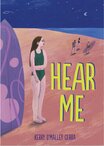
HEAR ME by Kerry O'Malley Cerra
“My parents are great. But for as long as we’ve known about my hearing loss, they have been searching for a solution. A way to fix me—my brokenness. And I do feel broken. Or maybe just left out. And it seems like the only way I’ll be able to communicate with my friends again is to fix my ears like Mom wants. But not HOW Mom wants.” (46)
Rayne is twelve years old, loves music, and was earning top grades, but has been experiencing progressive sensorineural hearing loss which appears to be rapidly progressing. She is falling behind in her schoolwork; she lies about what she can hear and avoids social situations, like her friend’s pool party and sleepovers, where she won’t be about to hear conversations or read lips, and is worried about starting a relationship with her first crush, Troy, who shares her love of the stars. She sees herself as broken and assumes that her family sees her in the same way “…lately, to me, stupid feels synonymous with sudden hearing loss.” (3). She does have a very supportive best friend, Jenika, as well as Troy.
Rayne’s parents, a middle-school teacher and high school principal, have been conducting research—“We’ve done the research. Weighed the pros and cons of all the options. And I do mean all the options.” (33)—and are adamant that Rayne should get cochlear implants. Rayne also has done the research and is just as adamant that she does not want the implants. “Cochlear implants are permanent. Permanent! I’ll be stuck with some bionic lumps sticking out of my head. And my hearing won’t actually be normal again—everyone will sound like robots. Plus, what if it doesn’t work? That’s happened, you know. You can’t just take it back because there is no going back” (35) Rayne is hoping for another option, to take part in a stem cell transplant research study, but she is turned down because of her age. When Dr. James gives her mother a brochure, she sees there is one more option—Bayview School for the Deaf and Blind, but it is across the state (a “no” from her parents) and since, Rayne doesn’t know sign language, would she even fit in there?
As her hearing loss progresses and she has to give up what she loves—surfing and listening to her favorite band, she also finds school and committees even more difficult to navigate. “Hanging out with Troy, winning the election [for seventh grade president], and having Jenika as a best friend are all like catching the epic wave, but underneath that board, underneath the water I can’t see through, it feels like a threat waiting for me.” (109) She even tries to explain to her friends why it is a “big deal”: “Because people assume I’m not smart when I answer the wrong things. Or they think I’m mean because sometimes I don’t answer at all, when I actually just didn’t hear them. And it’s a big deal because half the time I feel invisible—at parties, in school, even at dinner with my own family, And the few times I don’t feel invisible all have to do with me not being able to hear, and those times I wish I was invisible. There’s no winning for me.”
When Rayne finds out that her parents have scheduled her operation, she becomes desperate, first trying to hire a lawyer to find out if her parents can force her to have cochlear implants and, when that fails, running away to Orlando to try to beg her way into the stem cell study, which also fails. Getting lost on her way to another city, she ends up at Bayview, and finally she and her family explore what may be the most viable option for Rayne.
The novel, to be published in September, gives readers the opportunity to follow in Rayne’s footsteps—to hear (or not hear) through Rayne’s ears and experience not only the phenomena of auditory closure—the ability to make sense of missing, incomplete or distorted words, sentences, or concepts—but another phenomenon, listening fatigue. Some conversations are easier to interpret—“We *** wait too long. Dr. Olsen said *** longer *** go without hearing, *** less your auditory nerves *** be stimulated. (15); some are more challenging—“*** good. I *** *** much *** *** Colby. Go hang *** ***.” (25)
Some children, even those who have not experienced hearing loss, will see themselves in Rayne but, reading Kerry Cerra’s Own Voice story, hopefully many more will see themselves growing into Jenika and Troy, persons of empathy and understanding, a journey much like Colby, Rayne’s brother.
“My parents are great. But for as long as we’ve known about my hearing loss, they have been searching for a solution. A way to fix me—my brokenness. And I do feel broken. Or maybe just left out. And it seems like the only way I’ll be able to communicate with my friends again is to fix my ears like Mom wants. But not HOW Mom wants.” (46)
Rayne is twelve years old, loves music, and was earning top grades, but has been experiencing progressive sensorineural hearing loss which appears to be rapidly progressing. She is falling behind in her schoolwork; she lies about what she can hear and avoids social situations, like her friend’s pool party and sleepovers, where she won’t be about to hear conversations or read lips, and is worried about starting a relationship with her first crush, Troy, who shares her love of the stars. She sees herself as broken and assumes that her family sees her in the same way “…lately, to me, stupid feels synonymous with sudden hearing loss.” (3). She does have a very supportive best friend, Jenika, as well as Troy.
Rayne’s parents, a middle-school teacher and high school principal, have been conducting research—“We’ve done the research. Weighed the pros and cons of all the options. And I do mean all the options.” (33)—and are adamant that Rayne should get cochlear implants. Rayne also has done the research and is just as adamant that she does not want the implants. “Cochlear implants are permanent. Permanent! I’ll be stuck with some bionic lumps sticking out of my head. And my hearing won’t actually be normal again—everyone will sound like robots. Plus, what if it doesn’t work? That’s happened, you know. You can’t just take it back because there is no going back” (35) Rayne is hoping for another option, to take part in a stem cell transplant research study, but she is turned down because of her age. When Dr. James gives her mother a brochure, she sees there is one more option—Bayview School for the Deaf and Blind, but it is across the state (a “no” from her parents) and since, Rayne doesn’t know sign language, would she even fit in there?
As her hearing loss progresses and she has to give up what she loves—surfing and listening to her favorite band, she also finds school and committees even more difficult to navigate. “Hanging out with Troy, winning the election [for seventh grade president], and having Jenika as a best friend are all like catching the epic wave, but underneath that board, underneath the water I can’t see through, it feels like a threat waiting for me.” (109) She even tries to explain to her friends why it is a “big deal”: “Because people assume I’m not smart when I answer the wrong things. Or they think I’m mean because sometimes I don’t answer at all, when I actually just didn’t hear them. And it’s a big deal because half the time I feel invisible—at parties, in school, even at dinner with my own family, And the few times I don’t feel invisible all have to do with me not being able to hear, and those times I wish I was invisible. There’s no winning for me.”
When Rayne finds out that her parents have scheduled her operation, she becomes desperate, first trying to hire a lawyer to find out if her parents can force her to have cochlear implants and, when that fails, running away to Orlando to try to beg her way into the stem cell study, which also fails. Getting lost on her way to another city, she ends up at Bayview, and finally she and her family explore what may be the most viable option for Rayne.
The novel, to be published in September, gives readers the opportunity to follow in Rayne’s footsteps—to hear (or not hear) through Rayne’s ears and experience not only the phenomena of auditory closure—the ability to make sense of missing, incomplete or distorted words, sentences, or concepts—but another phenomenon, listening fatigue. Some conversations are easier to interpret—“We *** wait too long. Dr. Olsen said *** longer *** go without hearing, *** less your auditory nerves *** be stimulated. (15); some are more challenging—“*** good. I *** *** much *** *** Colby. Go hang *** ***.” (25)
Some children, even those who have not experienced hearing loss, will see themselves in Rayne but, reading Kerry Cerra’s Own Voice story, hopefully many more will see themselves growing into Jenika and Troy, persons of empathy and understanding, a journey much like Colby, Rayne’s brother.
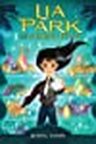
LIA PARK AND THE MISSING JEWEL by Jenna Yoon
“All I ever wanted was to be part of IMA, fight monsters, and be one of the four protectors of the world.” (6)
Twelve-year old Lia is born in a world where magical powers count. And she has none—or at least none that she can identify. Her best friend Joon has magical powers and a chance to pass the exam for the International Magic Agency-sponsored school and become a great agent. Even Lia’s parents, her Umma and Appa, who are only desk agents, have “very low doses of magic.”
“I turned twelve a few months ago. Normally, I was pretty good at Taekkyeon. But I couldn’t concentrate today. Feelings of dread welled up in the pit of my stomach. I knew how all this would end. Not well.” (2)
So Lia decides she will stay at the normal school and become popular. “I’d really thought that if I had no powers, I could still be somebody by being part of the popular group.” (46) But when she defies her parents instructions and goes to the birthday party of Dior, her wealthy and most popular classmate, Lia unwittingly releases some magic, and all chaos is unleashed. She returns home to find her sitter Tina dead in the driveway and her parents kidnapped by the evil diviner Gaya.
Following her parents’ cryptic clues, Lia and Joon are transported to her Halmoni’s (grandmother’s) house in Korea where Lia learns her real family history and that “When you were born, your power had already manifested.… But it was dangerous, because the monsters sensed it too. That you were different.” (90)
Lia decides she has to make things right, “All this was my fault.…It was because of me that my parents were kidnapped and were being held hostage by Gaya.”
What follows is edge-of-the-seat adventure that will keep readers reading and worrying and hoping as Lia follows clues and tries to find—and then secure—the jewel that Gaya demands and, using all her wits and spells, determines what to do to get back her parents (and Joon) without giving the power back to Gaya.
Readers will learn a bit about Korean culture and folklore as they race through this adventure with the newest superhero.
“All I ever wanted was to be part of IMA, fight monsters, and be one of the four protectors of the world.” (6)
Twelve-year old Lia is born in a world where magical powers count. And she has none—or at least none that she can identify. Her best friend Joon has magical powers and a chance to pass the exam for the International Magic Agency-sponsored school and become a great agent. Even Lia’s parents, her Umma and Appa, who are only desk agents, have “very low doses of magic.”
“I turned twelve a few months ago. Normally, I was pretty good at Taekkyeon. But I couldn’t concentrate today. Feelings of dread welled up in the pit of my stomach. I knew how all this would end. Not well.” (2)
So Lia decides she will stay at the normal school and become popular. “I’d really thought that if I had no powers, I could still be somebody by being part of the popular group.” (46) But when she defies her parents instructions and goes to the birthday party of Dior, her wealthy and most popular classmate, Lia unwittingly releases some magic, and all chaos is unleashed. She returns home to find her sitter Tina dead in the driveway and her parents kidnapped by the evil diviner Gaya.
Following her parents’ cryptic clues, Lia and Joon are transported to her Halmoni’s (grandmother’s) house in Korea where Lia learns her real family history and that “When you were born, your power had already manifested.… But it was dangerous, because the monsters sensed it too. That you were different.” (90)
Lia decides she has to make things right, “All this was my fault.…It was because of me that my parents were kidnapped and were being held hostage by Gaya.”
What follows is edge-of-the-seat adventure that will keep readers reading and worrying and hoping as Lia follows clues and tries to find—and then secure—the jewel that Gaya demands and, using all her wits and spells, determines what to do to get back her parents (and Joon) without giving the power back to Gaya.
Readers will learn a bit about Korean culture and folklore as they race through this adventure with the newest superhero.
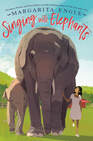
SINGING WITH ELEPHANTS by Margarita Engle
"Poetry is a dance of words on the page.” (1)
Poetry is like a planet…
Each word spins
orbits
twirls
and radiates
reflected starlight.” (10)
Poetry,
she said,
can be whatever you want it
to be. (25)
And poetry is what connects a lonely girl with a new neighbor who turns out to be Gabriela Mistral, the first Latin American (and only Latin American woman) winner of a Nobel Prize in Literature.
Poetry also helps this young girl to find her words and her courage to face a grave injustice.
Oriol is an 11-year-old Cuban-born child whose veterinarian parents moved to Santa Barbara where
the girls at school
make fun of me for being
small
brownish
chubby
with curly black hair barely tamed
by a long braid…
…call me
zoo beast
…the boys call me
ugly
stupid
tongue-tied
because my accent gets stronger
when I’m nervous, like when
the teacher forces me to read
out loud (7-8)
Oriol’s friends are her animals and the animals she helps with in their clinic and on the neighboring wildlife zoo ranch. She learns veterinary terminology from her parents and poetry terms from her new friend.
When the elephant on the zoo ranch owned by a famous actor gives birth to twins and one is taken from her family by the actor and held captive, Oriol, with the help of her mentor, her family, and her new friends, fight to reunite the baby with her mother and twin.
Readers learn Spanish phrases and quite a lot about poetry, animal rights, Gabriela Mistral, xenophobia, and courage.
courage
is a dance of words
on paper
as graceful as an elephant
the size of love (99)
I read this beautiful book, a must for grade 3-8+ classrooms and libraries, in an afternoon. I feel it is Cuban-American poet, the national 2017-19 Young People’s Poet Laureate, Margarita Engle’s, best writing although I have enjoyed, learned from, reviewed, and recommended a great many of her verse novels. As part of a poetry unit or a social justice unit, Oriol’s story will speak to readers and help move them to passion and action.
"Poetry is a dance of words on the page.” (1)
Poetry is like a planet…
Each word spins
orbits
twirls
and radiates
reflected starlight.” (10)
Poetry,
she said,
can be whatever you want it
to be. (25)
And poetry is what connects a lonely girl with a new neighbor who turns out to be Gabriela Mistral, the first Latin American (and only Latin American woman) winner of a Nobel Prize in Literature.
Poetry also helps this young girl to find her words and her courage to face a grave injustice.
Oriol is an 11-year-old Cuban-born child whose veterinarian parents moved to Santa Barbara where
the girls at school
make fun of me for being
small
brownish
chubby
with curly black hair barely tamed
by a long braid…
…call me
zoo beast
…the boys call me
ugly
stupid
tongue-tied
because my accent gets stronger
when I’m nervous, like when
the teacher forces me to read
out loud (7-8)
Oriol’s friends are her animals and the animals she helps with in their clinic and on the neighboring wildlife zoo ranch. She learns veterinary terminology from her parents and poetry terms from her new friend.
When the elephant on the zoo ranch owned by a famous actor gives birth to twins and one is taken from her family by the actor and held captive, Oriol, with the help of her mentor, her family, and her new friends, fight to reunite the baby with her mother and twin.
Readers learn Spanish phrases and quite a lot about poetry, animal rights, Gabriela Mistral, xenophobia, and courage.
courage
is a dance of words
on paper
as graceful as an elephant
the size of love (99)
I read this beautiful book, a must for grade 3-8+ classrooms and libraries, in an afternoon. I feel it is Cuban-American poet, the national 2017-19 Young People’s Poet Laureate, Margarita Engle’s, best writing although I have enjoyed, learned from, reviewed, and recommended a great many of her verse novels. As part of a poetry unit or a social justice unit, Oriol’s story will speak to readers and help move them to passion and action.
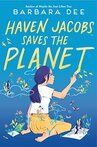
HAVEN JACOBS SAVES THE PLANET by Barbara Dee
“Although maybe we all had stuff in common with penguins. Maybe we were all standing on shrinking ice. Knowing it was shrinking and not knowing what to do about it. If there was even anything we could do at all.” (15)
Eco-anxiety is defined as “extreme worry about current and future harm to the environment caused by human activity and climate change.” A new survey of 10,000 young people in 10 countries finds climate change causing widespread, deeply felt anxiety. (Medical News Today) More than 45% of young people in [the] survey said their feelings about climate change "negatively affected their daily life and functioning." (World Economic Forum)
Seventh grader Haven Jacobs suffers from “eco-anxiety.” She bites her nails, can’t sleep, and has stomach upsets. She also starts “doomscrolling,” endlessly watching videos about environmental disasters. Her grades in social studies, the class with her favorite teacher, suffer as she begins to find studying history pointless.
Haven is also having trouble with her friends, mostly her old friend Archer, her best friend Riley, and Riley’s new friend Em. “I hadn’t told Archer how I felt about him avoiding me at school. I hadn’t told Em how I felt about the sleepover business. I hadn’t even told Riley how I felt about her telling me she’d left Em’s sleepover when actually she hadn’t. It was strange: I squabbled with Carter all the time, but sometimes when it came to my friends, I was kind of a wimp, wasn’t I? “ (97) Things start building as her eco-anxiety and friendship complications increase. “Right then I had this feeling: I don’t understand anything. Not just what was happening with the river, but with people, too. I never used to feel this way, but now, all of a sudden, everything felt like a giant mystery, with no identification chart.” (108)
When her science class gembarks on the annual study of the town’s local river, Haven and her classmates discover that the river has changed a lot since her older brother’s class conducted the same study. There were no longer any frogs and the pollution-sensitive macroorganisms appear to have died. Their hypothesis is that someone is polluting the river, and the only new industry in Belmont is Gemba, her father’s employer.
“One of the things [Ms. Packer] taught me this year is that if you can’t do great things, you should do small things greatly.” (267) Haven organizes a river cleanup, but even though the whole town shows up, not many are come to her information booth to hear about the state of their river, and even though everyone participated in the river cleanup, they left as much trash on shore as they took from the river. Sensing the failure, Haven organizes a Memorial Day protest which turns into a sleepover (which actually does end up solving her friendship problems).
With the support of her older brother Carter, her parents, and her new friend Kenji, son of the glass plant manager, Haven overcomes her fear of public speaking and addresses the town council—with some results. “Sometimes change was scary, like what was happening to the planet. But when it came to people—including older brothers—sometimes change could be kind of amazing.” (257)
“Although maybe we all had stuff in common with penguins. Maybe we were all standing on shrinking ice. Knowing it was shrinking and not knowing what to do about it. If there was even anything we could do at all.” (15)
Eco-anxiety is defined as “extreme worry about current and future harm to the environment caused by human activity and climate change.” A new survey of 10,000 young people in 10 countries finds climate change causing widespread, deeply felt anxiety. (Medical News Today) More than 45% of young people in [the] survey said their feelings about climate change "negatively affected their daily life and functioning." (World Economic Forum)
Seventh grader Haven Jacobs suffers from “eco-anxiety.” She bites her nails, can’t sleep, and has stomach upsets. She also starts “doomscrolling,” endlessly watching videos about environmental disasters. Her grades in social studies, the class with her favorite teacher, suffer as she begins to find studying history pointless.
Haven is also having trouble with her friends, mostly her old friend Archer, her best friend Riley, and Riley’s new friend Em. “I hadn’t told Archer how I felt about him avoiding me at school. I hadn’t told Em how I felt about the sleepover business. I hadn’t even told Riley how I felt about her telling me she’d left Em’s sleepover when actually she hadn’t. It was strange: I squabbled with Carter all the time, but sometimes when it came to my friends, I was kind of a wimp, wasn’t I? “ (97) Things start building as her eco-anxiety and friendship complications increase. “Right then I had this feeling: I don’t understand anything. Not just what was happening with the river, but with people, too. I never used to feel this way, but now, all of a sudden, everything felt like a giant mystery, with no identification chart.” (108)
When her science class gembarks on the annual study of the town’s local river, Haven and her classmates discover that the river has changed a lot since her older brother’s class conducted the same study. There were no longer any frogs and the pollution-sensitive macroorganisms appear to have died. Their hypothesis is that someone is polluting the river, and the only new industry in Belmont is Gemba, her father’s employer.
“One of the things [Ms. Packer] taught me this year is that if you can’t do great things, you should do small things greatly.” (267) Haven organizes a river cleanup, but even though the whole town shows up, not many are come to her information booth to hear about the state of their river, and even though everyone participated in the river cleanup, they left as much trash on shore as they took from the river. Sensing the failure, Haven organizes a Memorial Day protest which turns into a sleepover (which actually does end up solving her friendship problems).
With the support of her older brother Carter, her parents, and her new friend Kenji, son of the glass plant manager, Haven overcomes her fear of public speaking and addresses the town council—with some results. “Sometimes change was scary, like what was happening to the planet. But when it came to people—including older brothers—sometimes change could be kind of amazing.” (257)
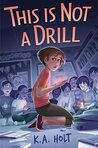
THIS IS NOT A DRILL by K.A. Holt
Reluctant readers beware! Kari Ann Holt, author of Rhyme Schemer and House Arrest, verse novels which I always recommend for middle-grade reluctant readers, has written another novel that will grab the attention of those who like to read and those who thought they did not.
We are all familiar with the rules of lock down drills:
Ava McDaniel is texting with her best friends, Em and Char, who has a flip phone and has to write out her emojis, before school and somehow during school. Upset about her parents’ impending divorce and the fact that Char told Em, Ava has a fight with Char and at lunchtime goes into the girls’ bathroom, planning to stay there during lunchtime.
Not one to check the LOLMS (Lila O'Lowry Middle School) APP for announcements, Ava doesn’t realize the school is on lock-down (a real lockdown, not a drill) until it is too late, and the doors to the classrooms in her hall are locked. She finds herself with 20% battery and ducks into the art room with “scared-sweaty tater tots” (her name for 6th graders). There is no teacher in the room—it was open during lunch and the kids went in to hide—and, despite her tater-tot complaints, she has empathy for them and tries to not show her fear and worry. She can text with Em who is hiding in the lunchroom, and later her mom and dad as she tries to figure out how to help Diego who is suffering from an asthma attack. When he faints, Ava realizes it is up to her to find an inhaler.
As the other kids text each other through the school app, which appears to be open to all of them but has become closed to the administrators and teachers, readers “overhear” their discussions about who is in the hall, which Ava (seems there are 4 in the school) is in the hall, whether she is a good person or the intruder. The share Ava stories as they rally behind her to try to pass her an inhaler under a door, and, then when that fails, a phone battery and guide her safely back to the art room through texts.
Certainly, school intrusion and lock-downs are serious subjects, and there will be concerns from some about the topic, especially since the kids do a lot of things wrong and it works out, but the intruder is not a shooter, [SPOILER-ALERT] just a disgruntled ex-husband of a teacher. But there is a balance of light (llamas on the loose tying up town traffic, which is a completely separate news story) and anxious moments that will draw readers in. The story is told completely through text messages and notifications which I thought I would find tedious but actually hooked me into reading the book in one afternoon sitting.
There are also issues of anxiety disorder (Char) and ways to manage it, and parental separation (Em and Ava) which may speak to many adolescent readers.
Reluctant readers beware! Kari Ann Holt, author of Rhyme Schemer and House Arrest, verse novels which I always recommend for middle-grade reluctant readers, has written another novel that will grab the attention of those who like to read and those who thought they did not.
We are all familiar with the rules of lock down drills:
- Secure and cover classroom windows and move all persons away from the windows.
- Stay with a teacher—but what if the room you ducked into, the art room, was empty except for a bunch of sixth graders?
- Keep the door windows covered – but what if you are signaling a fellow student who must evade the intruder and the police on her way to safety?
- Clear hallways, restrooms, and other rooms that cannot be secured – but what if where you were when the drill started was the girls’ bathroom? What if you have to go to the nurse’s office to get an inhaler for a student who passed out from an asthma attack? What if that 6th grade student was your best friend’s younger brother?
Ava McDaniel is texting with her best friends, Em and Char, who has a flip phone and has to write out her emojis, before school and somehow during school. Upset about her parents’ impending divorce and the fact that Char told Em, Ava has a fight with Char and at lunchtime goes into the girls’ bathroom, planning to stay there during lunchtime.
Not one to check the LOLMS (Lila O'Lowry Middle School) APP for announcements, Ava doesn’t realize the school is on lock-down (a real lockdown, not a drill) until it is too late, and the doors to the classrooms in her hall are locked. She finds herself with 20% battery and ducks into the art room with “scared-sweaty tater tots” (her name for 6th graders). There is no teacher in the room—it was open during lunch and the kids went in to hide—and, despite her tater-tot complaints, she has empathy for them and tries to not show her fear and worry. She can text with Em who is hiding in the lunchroom, and later her mom and dad as she tries to figure out how to help Diego who is suffering from an asthma attack. When he faints, Ava realizes it is up to her to find an inhaler.
As the other kids text each other through the school app, which appears to be open to all of them but has become closed to the administrators and teachers, readers “overhear” their discussions about who is in the hall, which Ava (seems there are 4 in the school) is in the hall, whether she is a good person or the intruder. The share Ava stories as they rally behind her to try to pass her an inhaler under a door, and, then when that fails, a phone battery and guide her safely back to the art room through texts.
Certainly, school intrusion and lock-downs are serious subjects, and there will be concerns from some about the topic, especially since the kids do a lot of things wrong and it works out, but the intruder is not a shooter, [SPOILER-ALERT] just a disgruntled ex-husband of a teacher. But there is a balance of light (llamas on the loose tying up town traffic, which is a completely separate news story) and anxious moments that will draw readers in. The story is told completely through text messages and notifications which I thought I would find tedious but actually hooked me into reading the book in one afternoon sitting.
There are also issues of anxiety disorder (Char) and ways to manage it, and parental separation (Em and Ava) which may speak to many adolescent readers.
PLAY LIKE A GIRL by Misty Wilson (graphic novel)
“Even though friends were kind of confusing, at least football ALWAYS made sense.” (135)
Misty, a super-competitive athletic, was always challenging the boys in feats of strength and endurance. But, in the summer before seventh grade, she was surprised, when deciding to play for the town’s football league, that even her friends on the team did not support her decision. When Cole said, “‘Football really isn’t a sport for girls’…not a single one of them was sticking up for me.” (7)
Undeterred, Misty joins the team and talks her best friend Bree into joining also. But Bree quits and starts hanging around with the popular Mean Girl Ava, and when Misty tries to change to be more “girly” like the two (a hilarious try at makeup), they still make fun of her, and Misty realizes, with Bree gone, she has no friends.
She throws herself into football and, as she wins over many of her male team members, she is befriended by two of the cheerleaders who appear to accept her, and like her, just as she is. “Middle school was complicated. But I knew one thing for sure: I was done trying to be someone else.” (258)
Misty Wilson’s graphic memoir (illustrated by husband David Wilson) shares her story of football, family, middle-grade friends and frenenemies—and empowerment and identity. I also learned a lot about football, the positions and the plays—especially from the illustrations—that I wish I had known when watching games as a teen and a mother of a player.
“Even though friends were kind of confusing, at least football ALWAYS made sense.” (135)
Misty, a super-competitive athletic, was always challenging the boys in feats of strength and endurance. But, in the summer before seventh grade, she was surprised, when deciding to play for the town’s football league, that even her friends on the team did not support her decision. When Cole said, “‘Football really isn’t a sport for girls’…not a single one of them was sticking up for me.” (7)
Undeterred, Misty joins the team and talks her best friend Bree into joining also. But Bree quits and starts hanging around with the popular Mean Girl Ava, and when Misty tries to change to be more “girly” like the two (a hilarious try at makeup), they still make fun of her, and Misty realizes, with Bree gone, she has no friends.
She throws herself into football and, as she wins over many of her male team members, she is befriended by two of the cheerleaders who appear to accept her, and like her, just as she is. “Middle school was complicated. But I knew one thing for sure: I was done trying to be someone else.” (258)
Misty Wilson’s graphic memoir (illustrated by husband David Wilson) shares her story of football, family, middle-grade friends and frenenemies—and empowerment and identity. I also learned a lot about football, the positions and the plays—especially from the illustrations—that I wish I had known when watching games as a teen and a mother of a player.
SWIM TEAM by Johnnie Christmas (graphic novel)
“But…Black people aren’t good at swimming.” (78)
When Bree and her father move from Brooklyn to Florida, she is excited about her first day of school. She has already made a friend, another 7th grader who lives in her apartment complex. Excited about joining the Math Team, Bree finds that the only elective that is still open is Swimming. And even though she tries to think about the things that make her happy—doing homework with her Dad, cooking, reading, and math—frequently “negative thoughts take over. And I think about the things that make me nervous and scared. I second-guess and doubt myself, even when I don’t want to.” (7) And some of the things that Bree doesn’t like are sports, pools, and she worries about not having friends. She is especially worried about Swimming class because she has never learned to swim.
Bree eludes the class, and, when she can no longer avoid it, Ms Etta, her neighbor and a former professional swimmer who happens to have swum on the team at Bree’s middle school back when the team almost won the championship, teaches Bree to swim. Ms Etta also explains the reasons that Bree assumes that Black people aren’t good at swimming. “From ancient Africa to modern Africa, from Chicago to Peru, in seas, rivers, lakes and pools, Black people have always swum and always will.” (80-81) But she also explains the history of segregation and discrimination that limited Blacks’ access to pools, Telling about Eugene Williams’ murder (1919), David Isom’s breaking of the color line (1958), and John Lewis’ protest (1962).
Bree becomes quite a good swimmer, and the coach of the school swim team tricks her into trying out. She joins the team with her new best friend Clara, and, with the help of Ms. Etta, the team makes it to the championship. But when a student, Mean-Girl Keisha, transfers from the rival private school and joins the team and the girls find out that Clara has won a swimming scholarship to the same private school for the next year, the team relay threatens to fall apart.
That is when they learn what happened to Ms. Etta’s team years ago that cost them the championship. Reuniting the former Swim Sisters reunites the present team as they learn about relationships. “A team is like a family. Sometimes family shows you how to do a flip turn. Or tells funny jokes—And is a little annoying. (215)
Johnnie Christmas’ new graphic novel tells the story of middle-grade friendships, socioeconomic prejudice and racial discrimination, and swimming through those negative thoughts that hold us back. In the classroom this novel could lead to some research on Black athletes in sports through history and discrimination.
“But…Black people aren’t good at swimming.” (78)
When Bree and her father move from Brooklyn to Florida, she is excited about her first day of school. She has already made a friend, another 7th grader who lives in her apartment complex. Excited about joining the Math Team, Bree finds that the only elective that is still open is Swimming. And even though she tries to think about the things that make her happy—doing homework with her Dad, cooking, reading, and math—frequently “negative thoughts take over. And I think about the things that make me nervous and scared. I second-guess and doubt myself, even when I don’t want to.” (7) And some of the things that Bree doesn’t like are sports, pools, and she worries about not having friends. She is especially worried about Swimming class because she has never learned to swim.
Bree eludes the class, and, when she can no longer avoid it, Ms Etta, her neighbor and a former professional swimmer who happens to have swum on the team at Bree’s middle school back when the team almost won the championship, teaches Bree to swim. Ms Etta also explains the reasons that Bree assumes that Black people aren’t good at swimming. “From ancient Africa to modern Africa, from Chicago to Peru, in seas, rivers, lakes and pools, Black people have always swum and always will.” (80-81) But she also explains the history of segregation and discrimination that limited Blacks’ access to pools, Telling about Eugene Williams’ murder (1919), David Isom’s breaking of the color line (1958), and John Lewis’ protest (1962).
Bree becomes quite a good swimmer, and the coach of the school swim team tricks her into trying out. She joins the team with her new best friend Clara, and, with the help of Ms. Etta, the team makes it to the championship. But when a student, Mean-Girl Keisha, transfers from the rival private school and joins the team and the girls find out that Clara has won a swimming scholarship to the same private school for the next year, the team relay threatens to fall apart.
That is when they learn what happened to Ms. Etta’s team years ago that cost them the championship. Reuniting the former Swim Sisters reunites the present team as they learn about relationships. “A team is like a family. Sometimes family shows you how to do a flip turn. Or tells funny jokes—And is a little annoying. (215)
Johnnie Christmas’ new graphic novel tells the story of middle-grade friendships, socioeconomic prejudice and racial discrimination, and swimming through those negative thoughts that hold us back. In the classroom this novel could lead to some research on Black athletes in sports through history and discrimination.
THIRST by Varsha Bajaj
“Over and over she chants, like it’s a mantra. ‘You’re not alone. You’re very brave.’
And slowly I begin to believe [Shanti].” (61)
---------------
Minni lives in Mumbai in an area of extreme poverty with little access to water. She goes to school, trying to graduate and make a better life, while her mother gathers water, cooks for the family, and works as a maid for a wealthy family. Her father works long hours at his tea stand, and her brother had to drop out of school and cuts vegetables in a restaurant, dreaming of becoming a chef. The people in her area wait long hours in line every morning for water which then has to be boiled to be safe.
One night Minni, her brother Sanjay, his friend Amit, and Minni’s best friend witness water being stolen by members of the Water Mafia, men who then sell it to the rich. Sanjay and Amit are seen by the thieves and have to leave town. Then Minni’s mother becomes ill and goes to stay with family who can care for her, and Minni has to balance getting and boiling the morning water, trying to arrive at school on time so she won’t be locked out, her studies, cooking for her father and herself, and covering her mother’s job working for Anita Ma’am, her daughter Pinky also a 12-year-old, and Pinky’s father mother who demeans and insults Minni.
Besides her best friend Faiza, many community members have faith in and support Minni. As she writes in her journal,
Your family is always part of you,
In your blood and in your memories.
Your true friends are with you too.
They hold you in their hearts and walk besides you.
So that even the days you walk by yourself,
You’re not alone. (78)
Minni wins a coveted scholarship to a Sunday computer class where the American instructor becomes yet another ally and where she works to design an app that might help with the time her community members lose standing in water lines each morning.
When working at Pinky’s lavish apartment, she notices,
Water flows through the taps in Pinky’s bathroom.
The tap doesn’t need s marigold garland wrapped around it.
Money, not prayers, makes the water flow. (73)
And when she recognizes the man in charge of the water theft, she knows she has to do something to stop the stealing of water.
“The next day doubts fill my head. Why do I think I can change anything? Who am I? A mere twelve-year-old girl who is struggling to pass seventh grade. Whose family is just scraping by in this city of millions. Then I remember all the fights I’ve witnessed in the water lines.
When there’s not enough water to go around, there’s anger fear, and frustration.…I can’t back away. I have to act, to do somethings.” (155)
“Over and over she chants, like it’s a mantra. ‘You’re not alone. You’re very brave.’
And slowly I begin to believe [Shanti].” (61)
---------------
Minni lives in Mumbai in an area of extreme poverty with little access to water. She goes to school, trying to graduate and make a better life, while her mother gathers water, cooks for the family, and works as a maid for a wealthy family. Her father works long hours at his tea stand, and her brother had to drop out of school and cuts vegetables in a restaurant, dreaming of becoming a chef. The people in her area wait long hours in line every morning for water which then has to be boiled to be safe.
One night Minni, her brother Sanjay, his friend Amit, and Minni’s best friend witness water being stolen by members of the Water Mafia, men who then sell it to the rich. Sanjay and Amit are seen by the thieves and have to leave town. Then Minni’s mother becomes ill and goes to stay with family who can care for her, and Minni has to balance getting and boiling the morning water, trying to arrive at school on time so she won’t be locked out, her studies, cooking for her father and herself, and covering her mother’s job working for Anita Ma’am, her daughter Pinky also a 12-year-old, and Pinky’s father mother who demeans and insults Minni.
Besides her best friend Faiza, many community members have faith in and support Minni. As she writes in her journal,
Your family is always part of you,
In your blood and in your memories.
Your true friends are with you too.
They hold you in their hearts and walk besides you.
So that even the days you walk by yourself,
You’re not alone. (78)
Minni wins a coveted scholarship to a Sunday computer class where the American instructor becomes yet another ally and where she works to design an app that might help with the time her community members lose standing in water lines each morning.
When working at Pinky’s lavish apartment, she notices,
Water flows through the taps in Pinky’s bathroom.
The tap doesn’t need s marigold garland wrapped around it.
Money, not prayers, makes the water flow. (73)
And when she recognizes the man in charge of the water theft, she knows she has to do something to stop the stealing of water.
“The next day doubts fill my head. Why do I think I can change anything? Who am I? A mere twelve-year-old girl who is struggling to pass seventh grade. Whose family is just scraping by in this city of millions. Then I remember all the fights I’ve witnessed in the water lines.
When there’s not enough water to go around, there’s anger fear, and frustration.…I can’t back away. I have to act, to do somethings.” (155)
WE ARE ALL WE HAVE by Marina Budhos
“Sometimes you think your life story is a straight line, a road humming forward. Maybe Ammi thought her story was a clear way ahead. She went to the best schools. She had a family, fancy clothes, a spot at a university. A big wedding and husband.
Me too. I thought Fatima and I were the same.
I thought my biggest problem was Ammi trying to be me.
I thought I got my height from Abu.
I was so focused on what was ahead, that I didn’t understand what was behind me.
It was too complicated.
It didn’t make a clean story.What good is a story if you don’t know all the parts?” (215)
Seventeen-year-old Rania came with her pregnant mother from Pakistan when she was a child. They were seeking asylum, ostensibly fleeing threats from those who killed her father, a journalist. Her younger brother Kamal was born an American citizen.When her mother is arrested by ICE and sent to a detention facility, Raina’s life—her plans for hanging out with best friend Fatima, working in a book store, getting ready for college—come to a screeching halt.
Not yet 18 and without an adult to take custody of them, Raina and Kamal are sent to a shelter, and Raina learns that her mother has been lying to her about the status of their appeal, her Pakistani family, who her father is, and the reason they fled to the United States. And she has no proof that their lives in Pakistan were in danger.“What hurts more: That they want us to leave? Or that my mother lied to me? (30)
“It’s like everything i’ve understood about us, our situation, has widened into this huge movie screen. It’s not just me and Kamal. Or Ammi [in detention] in Pennsylvania. Something bigger is going on: the white tents we’ve seen on the news; the shifting lines; the children sleeping curled on concrete floors; and now here [in the shelter], covering their faces. We are disappearing, into the holes and crevices of this country.” (85)
Carlos was one of the thousands of undocumented, unaccompanied teens who crossed the border on his own, fleeing gang violence, and ended up in a shelter, facing deportation when he turns 18.When Rania and Carlos meet, they take to the road with Kamal, first to find the uncle that Rania didn’t not know she had, and, when he refuses guardianship, to disappear. They shelter in a motel for teen summer workers where they earn money and the people look after them and when it is necessary to leave, Lidia finds them a temporary sanctuary in a synagogue in Vermont where Carlos realizes that their only chances are for him to cross to Canada and for Rania and Kamal to return “home” to help their mother prove her case with Rania’s newly-awakened memories of their life in Pakistan.
The heart of the story is Rania and Carlos’ relationship, both proud, independent teenagers who support and accept help from each other while providing Kamal with the childhood that they missed.This is an essential YA read, showing multiple sides of the immigration-refugee situation, and should be read by all teens, including teachers, as many of these children and adolescents are hiding in plain sight in our classrooms.
As Lidia, Rania’s mother’s lawyer, says, “The rules keep changing. I’ve got long-term clients in detention. I’ve got grandmothers put on airplanes without saying goodbye. People with job offers unable to get here. Everyday it’s another story. Your mother’s story is just one of them.” (69)
“Sometimes you think your life story is a straight line, a road humming forward. Maybe Ammi thought her story was a clear way ahead. She went to the best schools. She had a family, fancy clothes, a spot at a university. A big wedding and husband.
Me too. I thought Fatima and I were the same.
I thought my biggest problem was Ammi trying to be me.
I thought I got my height from Abu.
I was so focused on what was ahead, that I didn’t understand what was behind me.
It was too complicated.
It didn’t make a clean story.What good is a story if you don’t know all the parts?” (215)
Seventeen-year-old Rania came with her pregnant mother from Pakistan when she was a child. They were seeking asylum, ostensibly fleeing threats from those who killed her father, a journalist. Her younger brother Kamal was born an American citizen.When her mother is arrested by ICE and sent to a detention facility, Raina’s life—her plans for hanging out with best friend Fatima, working in a book store, getting ready for college—come to a screeching halt.
Not yet 18 and without an adult to take custody of them, Raina and Kamal are sent to a shelter, and Raina learns that her mother has been lying to her about the status of their appeal, her Pakistani family, who her father is, and the reason they fled to the United States. And she has no proof that their lives in Pakistan were in danger.“What hurts more: That they want us to leave? Or that my mother lied to me? (30)
“It’s like everything i’ve understood about us, our situation, has widened into this huge movie screen. It’s not just me and Kamal. Or Ammi [in detention] in Pennsylvania. Something bigger is going on: the white tents we’ve seen on the news; the shifting lines; the children sleeping curled on concrete floors; and now here [in the shelter], covering their faces. We are disappearing, into the holes and crevices of this country.” (85)
Carlos was one of the thousands of undocumented, unaccompanied teens who crossed the border on his own, fleeing gang violence, and ended up in a shelter, facing deportation when he turns 18.When Rania and Carlos meet, they take to the road with Kamal, first to find the uncle that Rania didn’t not know she had, and, when he refuses guardianship, to disappear. They shelter in a motel for teen summer workers where they earn money and the people look after them and when it is necessary to leave, Lidia finds them a temporary sanctuary in a synagogue in Vermont where Carlos realizes that their only chances are for him to cross to Canada and for Rania and Kamal to return “home” to help their mother prove her case with Rania’s newly-awakened memories of their life in Pakistan.
The heart of the story is Rania and Carlos’ relationship, both proud, independent teenagers who support and accept help from each other while providing Kamal with the childhood that they missed.This is an essential YA read, showing multiple sides of the immigration-refugee situation, and should be read by all teens, including teachers, as many of these children and adolescents are hiding in plain sight in our classrooms.
As Lidia, Rania’s mother’s lawyer, says, “The rules keep changing. I’ve got long-term clients in detention. I’ve got grandmothers put on airplanes without saying goodbye. People with job offers unable to get here. Everyday it’s another story. Your mother’s story is just one of them.” (69)
WINGS IN THE WILD by Margarita Engle
2018: Teen refugees from two different worlds. Soleida, the bird-girl (La Nina Ave), is fleeing an oppressive Cuban government who has arrested her parents, protesters of artistic liberty, their hidden chained-bird sculptures exposed during a hurricane; she is stranded in a refugee camp in Costa Rica after walking thousands of miles toward freedom. Dariel is fleeing from a life in California where he plays music that communicates with wild animals but also where he and his famous parents are followed by paparazzi and his life is planned out, complete with Ivy League university. When a wildfire burns his fingertips, he decides to go with his Cuban Abuelo to interview los Cubanos de Costa Rica for his book. And then he decides to stay to study, hopefully to save, the environment.
When Soleida and Dariel meet, he helps her feel joy—and the right to feel joy—again, and they fall in love, combining their shared passions for art and music, artistic freedom, and eco-activism into a human rights and freedom-of-expression campaign to save Soleida’s parents and other Cuban artists and to save the endangered wildlife and the forests through a reforestation project. This soulful story, beautifully and lyrically written by the 2017-19 Poetry Foundation's Young People's Poet Laureate Margarita Engle is not as much a story of romance but of a combined calling to save the planet and the soul of the people—art. Soleida and Dariel join my Tween and Teen Justice & Change Seekers whose stories are reviewed in https://www.literacywithlesley.com/justice--change....
Wings in the Wild also reintroduces two of my favorite characters, Liana and Amado of Your Heart—My Sky, who “became local heroes by teaching everyone how to farm during the island’s most tragic time of hunger.” (5) This is the 10th Margarita Engle verse novel (and memoirs) that I have read and recommended and from which I have learned about Cuban history.
2018: Teen refugees from two different worlds. Soleida, the bird-girl (La Nina Ave), is fleeing an oppressive Cuban government who has arrested her parents, protesters of artistic liberty, their hidden chained-bird sculptures exposed during a hurricane; she is stranded in a refugee camp in Costa Rica after walking thousands of miles toward freedom. Dariel is fleeing from a life in California where he plays music that communicates with wild animals but also where he and his famous parents are followed by paparazzi and his life is planned out, complete with Ivy League university. When a wildfire burns his fingertips, he decides to go with his Cuban Abuelo to interview los Cubanos de Costa Rica for his book. And then he decides to stay to study, hopefully to save, the environment.
When Soleida and Dariel meet, he helps her feel joy—and the right to feel joy—again, and they fall in love, combining their shared passions for art and music, artistic freedom, and eco-activism into a human rights and freedom-of-expression campaign to save Soleida’s parents and other Cuban artists and to save the endangered wildlife and the forests through a reforestation project. This soulful story, beautifully and lyrically written by the 2017-19 Poetry Foundation's Young People's Poet Laureate Margarita Engle is not as much a story of romance but of a combined calling to save the planet and the soul of the people—art. Soleida and Dariel join my Tween and Teen Justice & Change Seekers whose stories are reviewed in https://www.literacywithlesley.com/justice--change....
Wings in the Wild also reintroduces two of my favorite characters, Liana and Amado of Your Heart—My Sky, who “became local heroes by teaching everyone how to farm during the island’s most tragic time of hunger.” (5) This is the 10th Margarita Engle verse novel (and memoirs) that I have read and recommended and from which I have learned about Cuban history.
SIR FIG NEWTON AND THE SCIENCE OF PERSISTENCE by Sonja Thomas
Twelve-year-old Mira Williams is having a bad summer. Her father lost his job, so money is tight and her mother is working and dad now cooks; best friend Thomas has moved to Washington, D.C.; her enemy and major Science Fair competitor, Tamika Smith, has moved into Thomas’ old house and, improbably, seems interested in hanging out; and Mira’s beloved cat, Sir Fig Newton, has developed diabetes, “the silent cat killer,” an expensive illness to treat.
However, Mira is a budding scientist—her hero is Einstein, and she plans to become an astronomer-astrophysicist. But does she have the four qualities of every great scientist: patience, curiosity, being observant, and persistence? And will those qualities help her solve her problems?
As Mira wrestles with Thomas making a new friend in D.C. and her “frenemyship” with Tamika, who she learns is not as Mira assumed, and creating a plan to raise the money needed to save Fig, she also discovers, not religion, but the power of faith. As her Gran tells her, “Faith allows for possibilities.” (99)
“I was strong like miranium. I wasn’t afraid. I believed. My faith was in the facts. The indestructible, indisputable facts.” (105) Although she also learns that sometimes the facts are not what you originally believe.
This is a story of persistence, resilience, friendship, and support—and science.
Twelve-year-old Mira Williams is having a bad summer. Her father lost his job, so money is tight and her mother is working and dad now cooks; best friend Thomas has moved to Washington, D.C.; her enemy and major Science Fair competitor, Tamika Smith, has moved into Thomas’ old house and, improbably, seems interested in hanging out; and Mira’s beloved cat, Sir Fig Newton, has developed diabetes, “the silent cat killer,” an expensive illness to treat.
However, Mira is a budding scientist—her hero is Einstein, and she plans to become an astronomer-astrophysicist. But does she have the four qualities of every great scientist: patience, curiosity, being observant, and persistence? And will those qualities help her solve her problems?
As Mira wrestles with Thomas making a new friend in D.C. and her “frenemyship” with Tamika, who she learns is not as Mira assumed, and creating a plan to raise the money needed to save Fig, she also discovers, not religion, but the power of faith. As her Gran tells her, “Faith allows for possibilities.” (99)
“I was strong like miranium. I wasn’t afraid. I believed. My faith was in the facts. The indestructible, indisputable facts.” (105) Although she also learns that sometimes the facts are not what you originally believe.
This is a story of persistence, resilience, friendship, and support—and science.
JUMPER by Melanie Crowder
Blair Scott has a passion – firefighting. She has a goal—to become a smoke jumper even though she is only 19 years old. But Blair also has a secret—she has Type 1 Diabetes, a condition which could keep her from reaching her goal.
Luckily, Blair has an aunt, a biomedical engineer, who has physically trained her to withstand and adapt to strenuous conditions and has modified her diabetes equipment and a Smart watch to monitor her. And she has Jason, her best friend, who follows her when, in exceptionally active fire year, they are both accepted into U.S. Forest Service smokejumper training.
Blair feels she has to take risks and prove herself as, not only a young recruit, but especially as a woman.
This is a novel of adventure, danger, courage, passion, friendships, support, grief, and, most of all, the power of fire. Well-researched, the novel provides a vast amount of information about wildfire and firefighting training and protocols and will appeal to many teen readers.
Blair Scott has a passion – firefighting. She has a goal—to become a smoke jumper even though she is only 19 years old. But Blair also has a secret—she has Type 1 Diabetes, a condition which could keep her from reaching her goal.
Luckily, Blair has an aunt, a biomedical engineer, who has physically trained her to withstand and adapt to strenuous conditions and has modified her diabetes equipment and a Smart watch to monitor her. And she has Jason, her best friend, who follows her when, in exceptionally active fire year, they are both accepted into U.S. Forest Service smokejumper training.
Blair feels she has to take risks and prove herself as, not only a young recruit, but especially as a woman.
This is a novel of adventure, danger, courage, passion, friendships, support, grief, and, most of all, the power of fire. Well-researched, the novel provides a vast amount of information about wildfire and firefighting training and protocols and will appeal to many teen readers.
ODE TO A NOBODY by Caroline Brooks DuBois
I know [Ms. Koval’s] talking about writing
but I start to wonder
if you can revise yourself too.
See yourself in a new light
and not through the lens
of a forever-more-successful brother,
forever-joking
maybe former best friend,
and forever fighting
mom and dad. (214)
A novel of identity and self-development written in lyrical verse, Ode to a Nobody is the story of becoming your own somebody.
THE BEFORE
Quinn a/k/a Quinnie a/k/a Quinn(ie) worries that she is “Good for nothing.” Her eight-grade year becomes filled with voids. Forrest, her straight-A perfect brother is away at college. Her best friend Jack has invited Jade into their partnership and Jade is even better at skating than Jack and just as mean; eventually they defriend Quinn. And her Dad lives sometimes with them but often with her grandmother. Quinn’s grades are mediocre, and she is behind in her school work.
And then two things occur. The first is the tornado which hits Quinn’s area of the neighborhood. She and her mother temporarily move into the run-down Ivy Manor where she meets the “Weird Old Man” who owns the house; his grandson Ian, a freshman at the arts high school; and Freddie, the friendly dog.
Quinn notices how some people, like Jade and Jack who were not affected by the tornado, treat the victims but also how neighbors come together to help each other, and she re-evaluates her idea of friendship.
Did it take a tornado for people
to come together like this? I lean into the moment,
listen to their versions of the night. (141)
THE AFTER
Besides her new friendship with the thoughtful and kindhearted Ian,
The differences between Jack
and Ian make me feel something
I can’t explain—like crying and laughing
tumbled together, and like everything
I’ve ever known is about to change. (210)
Quinn discovers her writing talent.
Maybe writing could be my expertise.
I’ve begun to feel more like Quinn
than Quinnie or Quinn(ie)
when I’m writing, like a better,
more capable me. (211)
"Some writers,” [Ms. Koval] says,
"let their readers’ imaginations
finish the story, fill in the void
With their own interpretation." (223)
A good reason for our readers to read Quinn's story.
I know [Ms. Koval’s] talking about writing
but I start to wonder
if you can revise yourself too.
See yourself in a new light
and not through the lens
of a forever-more-successful brother,
forever-joking
maybe former best friend,
and forever fighting
mom and dad. (214)
A novel of identity and self-development written in lyrical verse, Ode to a Nobody is the story of becoming your own somebody.
THE BEFORE
Quinn a/k/a Quinnie a/k/a Quinn(ie) worries that she is “Good for nothing.” Her eight-grade year becomes filled with voids. Forrest, her straight-A perfect brother is away at college. Her best friend Jack has invited Jade into their partnership and Jade is even better at skating than Jack and just as mean; eventually they defriend Quinn. And her Dad lives sometimes with them but often with her grandmother. Quinn’s grades are mediocre, and she is behind in her school work.
And then two things occur. The first is the tornado which hits Quinn’s area of the neighborhood. She and her mother temporarily move into the run-down Ivy Manor where she meets the “Weird Old Man” who owns the house; his grandson Ian, a freshman at the arts high school; and Freddie, the friendly dog.
Quinn notices how some people, like Jade and Jack who were not affected by the tornado, treat the victims but also how neighbors come together to help each other, and she re-evaluates her idea of friendship.
Did it take a tornado for people
to come together like this? I lean into the moment,
listen to their versions of the night. (141)
THE AFTER
Besides her new friendship with the thoughtful and kindhearted Ian,
The differences between Jack
and Ian make me feel something
I can’t explain—like crying and laughing
tumbled together, and like everything
I’ve ever known is about to change. (210)
Quinn discovers her writing talent.
Maybe writing could be my expertise.
I’ve begun to feel more like Quinn
than Quinnie or Quinn(ie)
when I’m writing, like a better,
more capable me. (211)
"Some writers,” [Ms. Koval] says,
"let their readers’ imaginations
finish the story, fill in the void
With their own interpretation." (223)
A good reason for our readers to read Quinn's story.
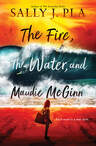
THE FIRE, THE WATER AND MAUDIE MCGINN by Sally J. Pla
It is obvious from all my reviews and recommendations that there are countless characters and their stories that I love. However, there are those characters who have gotten under my skin, whom I can’t forget and I even talk about long after I have closed the novel. I now add Sally J. Pla’s Maudie McGinn to that list.
“Shame words come unbidden from my brain. I tap them out with my teeth to help get rid of them. I wish I could spit them out and have them be gone, but shame words like to stick around and circle my head in a foolish invisible halo. They do it far too often.” (ARC, 67)
Maudie’s mother and father married when they were teenagers and are divorced. Mom and Maudie live in Houston where her mother has now re-married, it appears, to escape poverty. Her new husband Ron has anger management issues.
Maudie has autism; she is ostracized in school and has no friends. Her mother and Ron refuse to believe that she can’t control her stims and actions. Her first therapist, Mrs. Jills, bordered on abusive. “Obeying Mom was my job. Obeying Mom. Obeying Mrs. Jills. And now, I guess, obeying Ron. (ARC, 65)
Dad lives in California where Maudie spends the summers. Dad is loving, accepting, and more like Maudie than she realizes.
This summer when 13-year-old Maudie visits her father, she has a secret. Something that her mother makes her promise not to tell. Her mother says that telling the secret could cause her to be taken away from both parents.
A wildfire come through, and Maudie and her father, now homeless and having lost all their possessions, drive to his childhood town in southern California where an old friend lends them a rusty RV to live in. At the ocean Maudie discovers her talent, makes friends, and becomes part of the community. As she learns to surf, hoping to win a prize and help her father financially, she slowly discovers her value.
And sure enough the shame words come, floating like cartoon bubbles around my head:
annoying
Ridiculous
pain in the neck
wasting her time
But a few good words are also floating there:
hoping
ambitious
willing to work for it (ARC, 111)
She realizes that “I try hard to be the right kind of Maudie for each situation, for each thing. I’ve always felt sort of ashamed of this, but maybe it’s also a skill. To remold, instead of shatter.” (ARC, 119)
As Maudie meets others, besides her Dad, who see her worth, she arrives at the point where “In tiny, tiny handwriting, with a very fine Sharpie, I’m writing down all the good words people have used to describe me.… I want to teach myself that the good words are important to remember. I’ve only ever focused on the shame words before.” (ARC 240)
A novel—told in prose and some verse—crucial for every school and classroom library, this is a story about neurodiversities, acceptance, resilience, community, change, and finding the talents and worth that reside in all of us.
It is obvious from all my reviews and recommendations that there are countless characters and their stories that I love. However, there are those characters who have gotten under my skin, whom I can’t forget and I even talk about long after I have closed the novel. I now add Sally J. Pla’s Maudie McGinn to that list.
“Shame words come unbidden from my brain. I tap them out with my teeth to help get rid of them. I wish I could spit them out and have them be gone, but shame words like to stick around and circle my head in a foolish invisible halo. They do it far too often.” (ARC, 67)
Maudie’s mother and father married when they were teenagers and are divorced. Mom and Maudie live in Houston where her mother has now re-married, it appears, to escape poverty. Her new husband Ron has anger management issues.
Maudie has autism; she is ostracized in school and has no friends. Her mother and Ron refuse to believe that she can’t control her stims and actions. Her first therapist, Mrs. Jills, bordered on abusive. “Obeying Mom was my job. Obeying Mom. Obeying Mrs. Jills. And now, I guess, obeying Ron. (ARC, 65)
Dad lives in California where Maudie spends the summers. Dad is loving, accepting, and more like Maudie than she realizes.
This summer when 13-year-old Maudie visits her father, she has a secret. Something that her mother makes her promise not to tell. Her mother says that telling the secret could cause her to be taken away from both parents.
A wildfire come through, and Maudie and her father, now homeless and having lost all their possessions, drive to his childhood town in southern California where an old friend lends them a rusty RV to live in. At the ocean Maudie discovers her talent, makes friends, and becomes part of the community. As she learns to surf, hoping to win a prize and help her father financially, she slowly discovers her value.
And sure enough the shame words come, floating like cartoon bubbles around my head:
annoying
Ridiculous
pain in the neck
wasting her time
But a few good words are also floating there:
hoping
ambitious
willing to work for it (ARC, 111)
She realizes that “I try hard to be the right kind of Maudie for each situation, for each thing. I’ve always felt sort of ashamed of this, but maybe it’s also a skill. To remold, instead of shatter.” (ARC, 119)
As Maudie meets others, besides her Dad, who see her worth, she arrives at the point where “In tiny, tiny handwriting, with a very fine Sharpie, I’m writing down all the good words people have used to describe me.… I want to teach myself that the good words are important to remember. I’ve only ever focused on the shame words before.” (ARC 240)
A novel—told in prose and some verse—crucial for every school and classroom library, this is a story about neurodiversities, acceptance, resilience, community, change, and finding the talents and worth that reside in all of us.
Strong girls, resilient girls, creative girls abound in recent literature and through these novels, our readers can recognize the strength in themselves and their peers.